
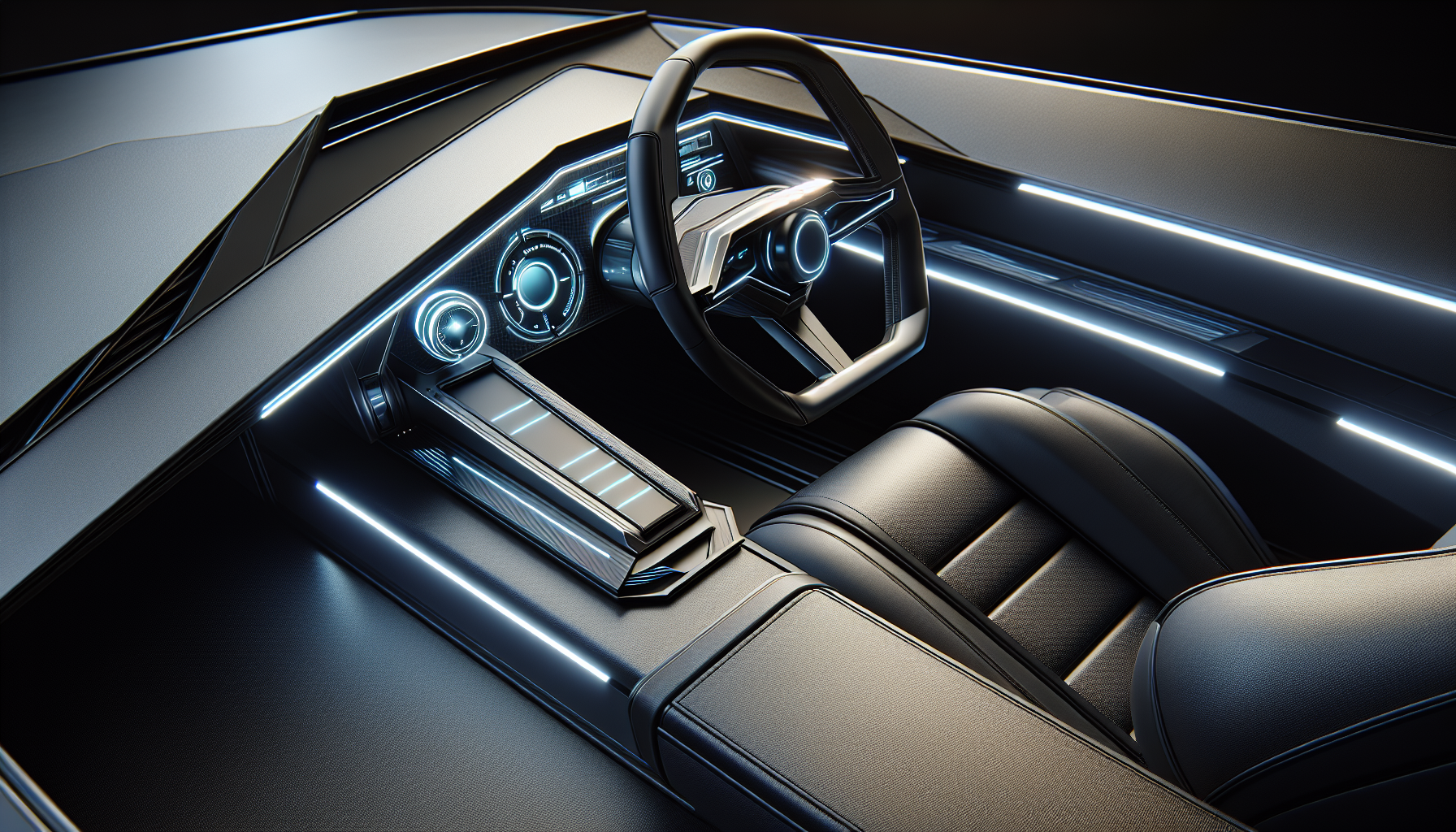
Have you looked closely at the new interior photos of the Tesla Cybertruck and wondered how the futuristic exterior translates into daily driving comfort and usability?
Tesla Cybertruck Interior Photos Reveal Futuristic Cabin
You’re looking at a cabin that aims to match the Cybertruck’s stark, angular exterior with a minimalist yet purposeful interior. The photos released so far show Tesla sticking to a clean design language while prioritizing visibility, utility, and tech-forward features.
First impressions: what the photos communicate
From the passenger side to the rear, the cabin photos give you a sense of wide-open space and a focus on straight lines and planar surfaces. You’ll notice Tesla has pared away visual clutter, which makes the interior feel roomy and modern, but also forces decisions about tactile comfort and practical storage.
Minimalist dashboard and control philosophy
The dashboard appears intentionally sparse, with long horizontal surfaces and limited physical controls. You’ll likely appreciate how this reduces distraction and creates a consistent aesthetic, though you may find yourself missing tactile buttons for frequently used functions.
Use of large screens and digital interfaces
Photos show a prominent central touchscreen integrated into the dash area, and evidence of a digital driver interface in front of the steering position. You’ll see Tesla continuing its move toward software-defined controls, where routine actions are handled through touch and voice rather than dedicated switches.
Dashboard layout and driver ergonomics
You’ll notice an emphasis on sightlines and reachability in the photos: the driver gets a clear view out the windshield and to the instrument cluster, and key controls are positioned within easy stretch. Ergonomics appear to favor simple, repeatable actions rather than an array of toggles.
Steering control and driver’s station
The steering setup in the photos is notable for its shape and placement, designed to maximize visibility of the instrument area and forward view. Whether you prefer a conventional round wheel or a more modernized shape, the layout appears to prioritize quick access to steering-mounted controls and a clear sightline to the road.
Instrumentation and heads-up information
Photos suggest a crisp digital readout for speed, range, and driver-assist alerts. You’ll find the screens emphasize critical information while allowing the main touchscreen to handle infotainment and vehicle settings, reducing the need to hunt for simple driving info.
Center console and storage solutions
The center console shown in the photos looks utilitarian but clever, with compartments meant for everyday items, flat surfaces for devices, and the potential for modular configurations. You’ll probably appreciate the storage depth for modern life—phones, cables, water bottles, and gear.
Cupholders, wireless charging, and device placement
Cupholders and device trays appear integrated into the center area with an eye toward usability. Wireless charging spots are visible in some images, so you can keep your phone powered without extra cables. The layout suggests Tesla considered how you’ll use the space during daily commutes and longer trips.
Hidden storage and lockable compartments
The photos hint at covered storage spaces and a substantial center bin that may offer lockability and organization options. You’ll value these features if you carry valuable tools, electronics, or paperwork and need secure stowage while parked.
Seating, comfort, and materials
Seating in the photos looks supportive and simple, with bolstering that prioritizes practicality over luxury. The materials seem durable and easy to clean, which suits the truck’s outdoor and work-oriented persona, but Tesla also keeps the aesthetic modern and refined.
Front seats: support and adjustability
Front seats shown are likely to be well-bolstered with multiple adjustment points, possibly including power adjustments and memory functions. You’ll notice Tesla balancing comfort for everyday driving with durability for heavier-duty use.
Rear seating: space and functionality
The rear bench appears to be roomy, with good legroom and a flat floor that increases usable space. If you carry passengers or equipment frequently, the rear seat design looks made to be both comfortable and flexible.
Materials and finishes: balance of durability and style
Photos show a mix of matte surfaces, robust plastics, and premium trim accents that avoid flashy luxury in favor of a purposeful aesthetic. You’ll find the finishes chosen to stand up to wear and tear while still conveying a high-tech feel.
Upholstery choices and options
Material choices visible in the images lean toward synthetic leathers or durable textiles that are stain-resistant and easy to maintain. You’ll appreciate Tesla’s apparent priority on materials that handle dirt, water, and regular use without sacrificing cabin appeal.
Trim, colors, and accents
The interior color palette is neutral and modern, with metallic or matte accents to break up large flat surfaces. You’ll notice how subtle contrasts and textures add visual interest without overwhelming the minimal design.
Infotainment, connectivity, and software features
The Cybertruck photos show Tesla keeping infotainment central to the driving experience, with a large touchscreen handling media, navigation, vehicle controls, and customization. You’ll find software updates and app-based features augmenting functionality over time.
Screen layout and user interface
The touchscreen in the photos looks large and readable, with a horizontally oriented UI that’s optimized for both driver and passenger use. You’ll likely interact with climate, navigation, music, and vehicle controls primarily through that central screen.
Connectivity: phone, cloud, and app integration
Images suggest comprehensive connectivity options—Bluetooth, cellular connection, Wi-Fi, and cloud-linked services. You’ll benefit from remote control functions, real-time updates, and Tesla’s ecosystem of apps and services.
Climate control and comfort features
Photos indicate that climate controls are integrated into the touchscreen and may include quick access shortcuts for temperature, seat heating, and vent settings. You’ll notice Tesla’s approach to climate emphasizes software control, with likely options like zoned heating and rapid defrost.
Vent design and airflow strategy
The ventilation system appears to be built into discrete channels with minimal visible vents, contributing to the clean look. You’ll find airflow that’s tuned for wide coverage and potentially quieter operation, consistent with the cabin’s tech-forward tone.
Seat heating, cooling, and optional comfort extras
Heated seats are evident, and you may find ventilated or even massaging seat features available depending on trim. You’ll appreciate these options for adapting the cabin to hot or cold climates during long trips.
Lighting, ambience, and mood
Interior photos show subtle ambient lighting applied to key surfaces, creating a calm but futuristic atmosphere. You’ll be able to set the mood for driving with lighting that’s functional yet understated.
Ambient light placement and effects
Strategic placement of LEDs along the dash and door lines gives the cabin a layered feel without being showy. You’ll find that mood lighting helps during night driving by adding depth and orientation cues.
Reading lights and task illumination
Task lighting in photos appears well targeted, supplying driver and passenger reading lights without flooding the interior with glare. You’ll value focused illumination for work or map-reading during low-light conditions.
Safety, driver assistance, and visibility
Photos show robust visibility aided by the wide windshield and thoughtful mirror placement, along with evidence of numerous sensors and camera housings for advanced safety systems. You’ll likely experience a suite of driver-assist features refined by Tesla’s experience with fleet data.
Airbags, structural cues, and occupant protection
The interior layout suggests reinforced structural elements and careful placement of impact-absorbing materials around the cabin. You’ll expect modern airbag systems and crash-survivability features consistent with current EV safety expectations.
Autopilot hardware and sensor integration
Photos hint at multiple camera placements and sensor arrays integrated into the cabin and surrounding body, supporting Tesla’s Autopilot and Full Self-Driving hardware. You’ll rely on these systems for assisted driving, though you’ll still need to stay attentive as required.
Sound, noise absorption, and acoustic treatment
The Cybertruck photos reflect attention to acoustic comfort, with interior materials and seals likely tuned to reduce wind and road noise. You’ll notice the cabin aims to be quieter than traditional trucks, enhancing audio clarity and conversation.
Speaker placement and audio system
Speaker grills and subwoofer locations visible in the images point to a premium audio system option. You’ll get immersive sound for music and calls, and the system will likely integrate with Tesla’s audio tuning and streaming options.
Road noise management and insulation
Insulation around doors and the cabin floor appears robust, suggesting Tesla prioritized reducing NVH (noise, vibration, harshness). You’ll enjoy a more relaxed cabin on highways and rough roads thanks to these design choices.
Storage and cargo flexibility
Photos show clever cargo solutions including under-seat bins, a spacious center console, and fold-flat rear seats for expanded cargo volume. You’ll find the Cybertruck designed to be as functional inside as it is outside.
Frunk, under-bed storage, and bed access
Although photos mainly highlight the passenger cabin, interior storage complements the truck’s external cargo solutions like the bed vault and frunk. You’ll benefit from a system that lets you separate dirty gear from the passenger compartment.
Load planning and attachment points
Interior photos hint at multiple tie-down points and utility hooks inside the cabin and rear areas for securing cargo. You’ll find these features useful if you frequently carry tools, bikes, or other equipment.
Practical daily use: living with the Cybertruck interior
The photos suggest a cabin that’s designed for both urban commutes and rugged tasks, with materials and layout selected to handle your daily needs. You’ll appreciate the combination of durable surfaces, practical storage, and tech convenience.
Cleaning and maintenance considerations
Given the durable materials shown, you’ll find cleaning straightforward—wiping down surfaces and vacuuming fabric areas should keep the cabin tidy. Tesla’s choice of stain-resistant materials means fewer worries about spills and muddy boots.
Family use and child seat installation
The rear bench and ISOFIX anchor points visible in images indicate family-friendly functionality. You’ll be able to secure child seats and organize family gear with relative ease thanks to the flat floor and accessible seating.
Customization, trims, and option packages
Photos indicate Tesla may offer a range of interior packages that balance practicality and premium touches. You’ll likely see options for upgraded audio, different upholstery finishes, and additional comfort features.
Trim levels and price-to-feature tradeoffs
While basic interiors favor function and durability, higher trims add premium materials and tech options. You’ll need to weigh which features are essential for your use—whether you want extra comfort, premium sound, or enhanced convenience items.
Color schemes and personalization
Images show a neutral palette with potential accent options, letting you choose a look that fits your style without screaming for attention. You’ll find personalization choices that let you prioritize subtlety or contrast.
What the photos reveal about Tesla’s manufacturing focus
Interior photos give clues about Tesla’s production readiness—consistent panel gaps, repeatable finishes, and modular assemblies indicate a maturing manufacturing process. You’ll be able to judge quality and fit by how uniform these details appear across the images.
Fit-and-finish observations
Close-up photos show how surfaces meet and how seams are managed; consistent gaps and clean joins are signs of refined production. You’ll want to inspect these details in person to confirm what photos suggest.
Material sourcing and sustainability hints
Tesla’s choices in visible materials point to durable and possibly recycled components, reflecting a broader industry trend toward sustainable interior solutions. You’ll find these materials often provide similar comfort to traditional leathers while being easier on the environment.
Comparison with rival electric trucks
It helps to compare the Cybertruck interior to competitors to understand where it fits in the market. The table below highlights observed or reported interior differences that matter for buyers.
| Feature area | Tesla Cybertruck (photos) | Rivian R1T | Ford F-150 Lightning |
|---|---|---|---|
| Design language | Minimalist, planar surfaces | Adventure-oriented, warm materials | Traditional truck layout with modern touches |
| Central screen | Large horizontal touchscreen | Large vertical/horizontal display, secondary screen | Large center screen, more physical controls |
| Seating materials | Durable synthetic leather/textiles | Premium textiles and eco-materials | Multiple fabric/leather options |
| Storage flexibility | Modular center console, under-seat space | Numerous compartments, gear-specific storage | Practical center console, rear storage options |
| Ambient lighting | Subtle, integrated LEDs | Warm, layered lighting | Functional, with some ambient options |
| Family-friendliness | Flat floor, ISOFIX points | Spacious, family-focused layout | Traditional truck setup, family upgrades available |
You’ll notice the Cybertruck emphasizes a stark, tech-forward aesthetic that can feel more like a high-end tool than a cozy cabin. Your choice may come down to whether you prioritize minimalist tech or warm, traditional materials.
What the photos don’t tell you: remaining questions
Photos offer a lot, but they don’t answer everything. You’ll want to test the Cybertruck in person to confirm comfort, actual material feel, and the day-to-day usability of the digital controls.
Long-term durability and wear patterns
Images don’t reveal how surfaces will age after years of sun exposure, heavy use, and abrasions. You’ll want to check warranty coverage and material testing results for a full picture.
Real-world ergonomics and reachability
A photo shows layout, but not how you’ll feel after a three-hour drive or while loading heavy gear repeatedly. You’ll need to sit in it and test controls under real driving conditions to evaluate long-term comfort.
Buyer considerations and practical tips
If you’re thinking about owning one, the photos should inform your checklist for a test drive and inspection. You’ll want to verify specific features in person and think about how the truck will fit into your daily life.
Inspection checklist for the interior
- Sit in the driver and passenger seats for extended comfort checks.
- Test touchscreen responsiveness and layout for frequently used tasks.
- Confirm storage sizes and whether devices fit typical places you use them.
- Check materials for texture, cleanliness, and perceived durability.
- Evaluate visibility out of the cabin in different seating positions.
Questions to ask a salesperson or during a test drive
- Which materials are standard and which are optional?
- Are there packages for family-friendly equipment or work-oriented upgrades?
- What real-world range losses does climate control and HVAC use cause?
- How are software updates handled for infotainment and driver-assist features?
Practical scenarios: how the interior supports different lifestyles
Thinking about how you’ll use the truck helps you decide if the Cybertruck’s interior photos match your needs. You’ll see advantages for outdoor enthusiasts, contractors, daily commuters, and families depending on configuration.
For outdoor and gear-heavy users
Durable surfaces, modular storage, and a flat rear floor will help you manage gear and muddy boots without worrying about stains. You’ll benefit from the practicality of easy-to-clean materials and accessible storage.
For tech-minded drivers and commuters
The large screens and software-driven controls will satisfy tech-focused users who like remote monitoring, updates, and deep infotainment features. You’ll enjoy the seamless integration with apps and Tesla’s connectivity.
For families and everyday use
The spacious rear bench and flat floor provide versatility for child seats and family cargo, though you’ll want to confirm ease of access and durability for frequent family use. You’ll also want to confirm the presence of cupholders, storage, and sun protection features for daily comfort.
Final thoughts: what the photos promise and what you should verify
The interior photos present a cabin that’s distinctly Tesla—minimal, tech-centric, and functional. You’ll likely appreciate the strong sense of purpose in the design, but plan to verify comfort, finish quality, and feature implementation in person before deciding.
Summary of key takeaways
- The cabin communicates minimalism, tech integration, and practical storage.
- Materials appear durable and modern, favoring easy maintenance.
- Infotainment and connectivity remain central to the user experience.
- Photos suggest strong production readiness, but you should confirm fit, finish, and long-term durability in person.
How to prepare for your in-person assessment
Bring items you frequently carry—phone, laptop, child seat, tools—and try placing them in the spaces shown in photos. Conduct a thorough test drive to evaluate visibility, comfort, and how the infotainment system handles real-world tasks. You’ll get the most accurate sense of whether the Cybertruck’s futuristic cabin fits your lifestyle.
If you want, I can create a printable inspection checklist tailored to your priorities (family use, work utility, tech features), or summarize the interior features compared to a specific competitor you’re considering. Which would you prefer?