
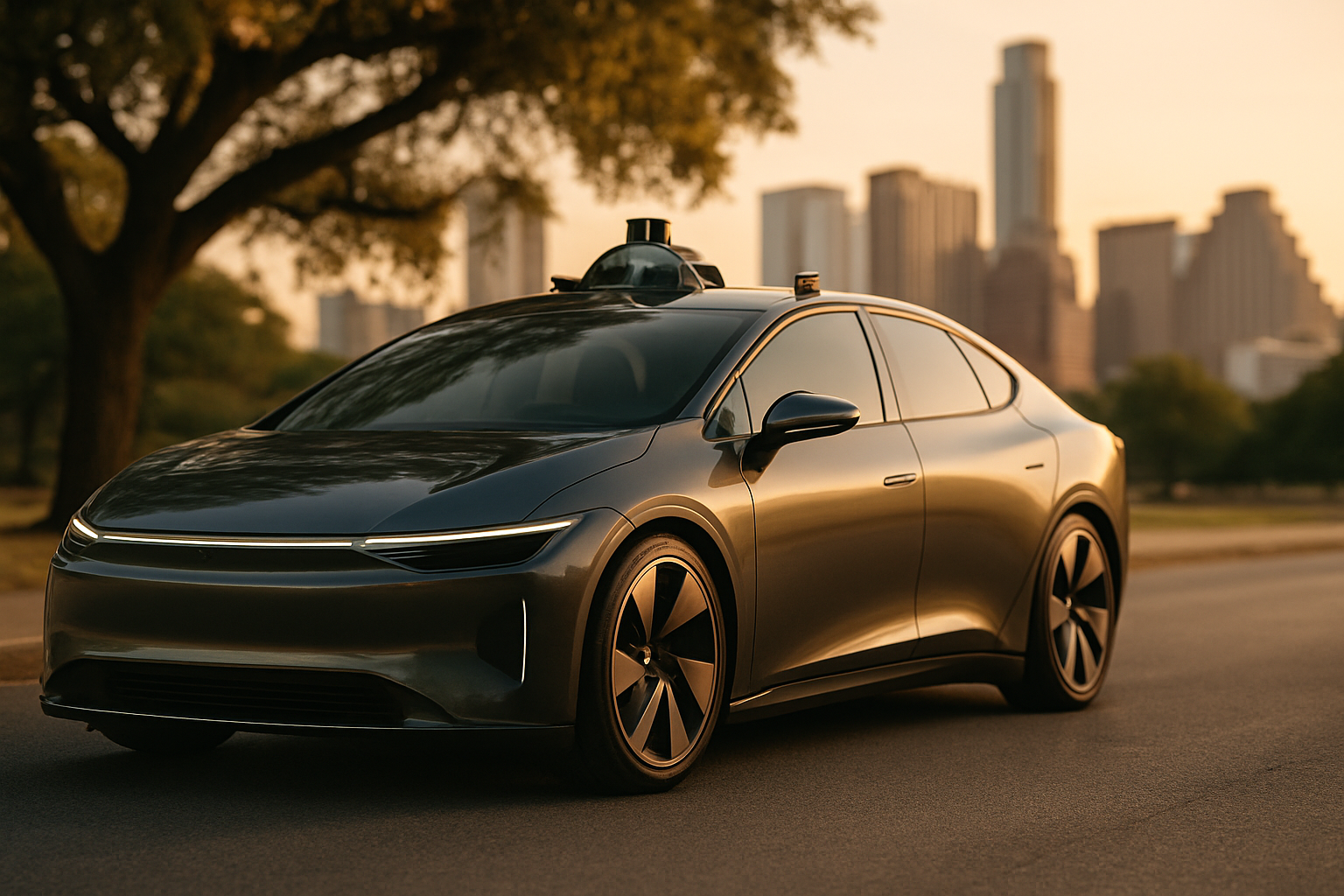
Have you ever imagined stepping into a car that drives itself through the heart of a busy city while you relax or work?
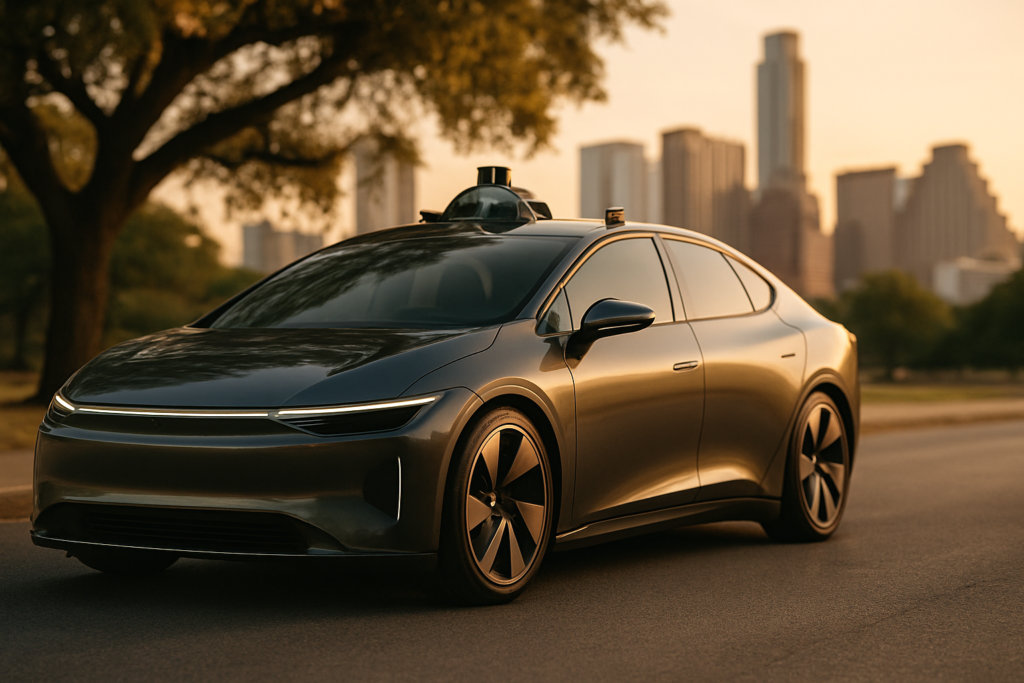
Tesla Robotaxi Navigates Austin Streets
This article walks you through what it means when a Tesla Robotaxi is navigating Austin streets. You’ll get an overview of the technology, how it interacts with local rules and infrastructure, what riders can expect, and the broader impacts on safety, jobs, and the urban environment.
What is a Tesla Robotaxi?
A Tesla Robotaxi is Tesla’s vision of a fully autonomous vehicle available for ride-hailing without a human driver behind the wheel. You should think of it as a Tesla equipped with the company’s full self-driving (FSD) software and supporting hardware, operating as a commercial on-demand service rather than a privately owned car.
This section explains the concept and sets expectations about what “robotaxi” means in practice, including limitations and typical usage scenarios.
The difference between advanced driver assistance and a robotaxi
Advanced driver assistance systems (ADAS) like lane-keeping or adaptive cruise control are meant to assist a human driver. A robotaxi is intended to operate without a human driver, managing all aspects of driving for passenger trips.
If you’re used to autopilot-like features, note that robotaxi-level autonomy requires handling complex, unpredictable urban scenarios on its own — something that is currently rolling out gradually and often under careful testing and regulatory oversight.
How Tesla frames its robotaxi proposition
Tesla positions the robotaxi as an extension of its FSD efforts: a fleet that can generate revenue when owners aren’t using their cars or a company-operated service that provides rides. From your perspective as a rider, the promise is lower-cost, convenient, and increasingly widespread autonomous mobility.
You should keep in mind that Tesla’s public statements often mix technology roadmaps with aspirational timelines; real-world deployments may be phased and geographically limited.
How the system works: sensors, compute, and software
Understanding the how helps you trust the what. The robotaxi relies on a stack of sensors, a powerful onboard computer, and neural-network-based driving software to perceive, reason, and act in real-time.
Below is a concise table summarizing the core components and what they do for your trip.
| Component | Function | What it means for you |
|---|---|---|
| Cameras (multiple, around vehicle) | Primary visual input for lane lines, signs, pedestrians, other vehicles | Detects and interprets the scene similarly to human vision |
| Ultrasonic sensors | Short-range detection for parking and close obstacles | Helps with low-speed maneuvers and curb proximity |
| GPS & mapping | Provides location and route-level guidance | Enables navigation and route planning through Austin |
| Onboard computer (FSD computer) | Processes sensor data and runs neural networks | Makes driving decisions in milliseconds |
| Neural network software | Perception, prediction, planning, control modules | Learns from fleet data; updates improve behavior over time |
| Remote supervision tools | Teleops or monitoring systems for edge cases | Human intervention if the car encounters unsolvable scenarios |
This table gives you a quick sense of how different parts combine to produce the robotaxi behavior you experience.
Why Tesla avoids LiDAR
Tesla has publicly chosen not to use LiDAR, focusing on camera-based perception and high-performing neural networks. For you, that means the system attempts to interpret the same visual cues humans use and relies on large-scale fleet data to account for edge cases.
This approach has trade-offs: it aims to be cost-effective and scalable, but depends heavily on software robustness and high-quality visual perception.
Mapping and localization on Austin streets
City driving requires detailed knowledge of dynamic environments. Mapping and localization anchor a robotaxi’s understanding of where it is and how to proceed through busy corridors like downtown Austin, the University of Texas area, and congested arterial roads.
You should expect the robotaxi to use a mix of pre-built maps, live GPS, and real-time sensor observations to localize itself, especially in areas with frequent construction or temporary lane changes.
Handling Austin’s unique road features
Austin features narrow streets in some neighborhoods, frequent construction zones, shared bike lanes, and active pedestrian scenes around music venues and university events. Tesla’s system needs to be adaptable to all of these.
When you ride, the car’s behavior will reflect its understanding of local nuances like bike lanes, stop-and-go traffic on I-35 frontage roads, and the heavy crosswalk usage in entertainment districts.
Maps, updates, and fleet learning
Tesla leverages fleet data to continuously update its models and maps. That means the more local driving the system logs in Austin, the better it becomes at handling specific intersections, signal timings, and recurring anomalies.
From your perspective, regular over-the-air updates may change driving behavior — often improving performance and sometimes altering how cautious or assertive the robotaxi feels.
Regulatory environment: state and city considerations
Legal and policy layers shape when, where, and how a robotaxi can operate. Texas law and Austin’s local ordinances both influence deployment, and you’ll see differing levels of oversight depending on the jurisdiction.
This section clarifies how state-level regulations, city permitting, and public safety requirements combine to shape robotaxi service availability.
Texas statewide rules vs. Austin local rules
Texas has taken a relatively permissive stance toward autonomous vehicle testing and operation, but cities like Austin can impose local requirements related to curb usage, pickup/drop-off zones, and traffic management.
If you want to ride in Austin, the robotaxi operator must comply with both state and local mandates — that affects hours of operation, permitted routes, and where vehicles can board passengers.
Permitting, reporting, and safety audits
Operators often need to file safety cases, provide test data, and obtain permits to run passenger-carrying autonomous vehicles. You may notice periodic reporting or public audits intended to reassure residents and regulators about safety.
These requirements aim to create transparency so you can be confident that the service meets established performance and incident-review standards.
Safety measures and redundancies
Safety is the most common topic you’ll see discussed around robotaxis. Tesla’s approach layers software monitoring, redundant control systems, and fail-safe behaviors to manage risk.
This section explains the safety redundancies you rely on as a passenger and how the system responds to unusual circumstances.
Real-time monitoring and fallback behaviors
A robotaxi should continuously monitor its sensors for anomalies. If it encounters a scenario it cannot resolve confidently — blocked roads, sensor failures, or unusual actor behavior — it will slow, pull over, or request remote assistance.
For you, that means the vehicle may pause mid-ride to reassess conditions or end a trip early if it determines it cannot proceed safely.
Redundant software and hardware checks
Critical systems run with verifications and health checks so your ride isn’t compromised by a single error. The software evaluates sensor fusion outputs and cross-checks decisions before executing maneuvers.
You benefit from these checks because the system will favor safer, more conservative actions when uncertainty spikes.
Rider experience: hailing, payment, and in-vehicle interaction
Riding a robotaxi changes the passenger interface compared to traditional ride-hailing. From booking to drop-off, the experience is designed for minimal friction.
You’ll likely use an app to hail the robotaxi, choose options (quiet ride, wheelchair access), and pay automatically. In-vehicle interfaces present route information and safety prompts.
Booking and pickup logistics
Apps typically show vehicle ETA, expected arrival point, and step-by-step pickup instructions. Austin’s curb management — especially near busy venues — means precise pickup points will reduce delays.
You should follow the app’s instructions for the safest boarding location; the robotaxi may refuse to stop in hazardous zones.
Accessibility and comfort features
Robotaxi designs may include wheelchair accessibility, adjustable climate control, and options to request assistance for luggage. You should be able to select accessibility features when you book.
While you won’t have a human driver to assist physically, many services plan for partnerships with local on-demand aid or station attendants in high-traffic areas.
Infrastructure considerations: charging, curb lanes, and parking
A robotaxi fleet relies on urban infrastructure for charging, staging, and efficient operations. Austin’s current infrastructure needs adaptations to fully accommodate autonomous, electric fleet operations.
This section explains the infrastructure upgrades you’ll notice in the city and how they affect ride availability and service reliability.
Charging hubs and battery logistics
Robotaxi fleets require strategically placed fast-charging hubs. You might see dedicated charging depots in industrial zones or near major transit nodes to minimize deadheading (empty repositioning).
As a rider, charging hub placement affects vehicle availability and could make surge times more or less likely.
Curb management and pickup zones
Cities often convert curb space into managed loading zones for micro-mobility, delivery, and autonomous pickups. Austin may designate specific spots for robotaxi pick-up and drop-off to reduce blockages and conflicts.
You should be aware that your pickup location may change based on events, construction, or peak hours, so follow app guidance.
Traffic flow and congestion effects
Autonomous vehicles can change traffic dynamics, sometimes improving flow and sometimes increasing vehicle miles traveled. The net effect depends on operational strategies and fleet size.
This section outlines likely traffic implications you’ll encounter and how robotaxis might change your daily commute environment.
Potential to smooth traffic vs. induced demand
Robotaxis can execute consistent, predictable driving patterns that reduce shockwaves (sudden braking) and potentially ease congestion. However, if robotaxis are too cheap or inefficiently routed, they may increase total vehicle miles and worsen congestion.
From your vantage point, you might experience steadier traffic in some corridors but more vehicles on the road in others, especially near popular pickup locations.
Interaction with human drivers and micromobility
Robotaxis must coexist with human drivers, cyclists, and pedestrians. Predictable behavior helps, but mixed traffic raises complex edge cases.
You’ll likely notice more cautious maneuvers around shared-bike lanes and increased attention when crossing zones near nightlife areas or campus-heavy spots.
Economic and labor impacts
Widespread robotaxi deployment has significant implications for ride-hailing drivers, automotive service workers, and local economies.
This section discusses jobs that may be displaced, new roles that may be created, and how you’ll see economic shifts in Austin.
Effects on drivers and gig workers
If robotaxis replace human-driven rides, drivers could lose income. However, new roles — fleet maintenance, remote monitoring, charging infrastructure technicians — may offset some losses.
You should consider that transitions often require workforce retraining and targeted policy responses to mitigate negative impacts.
Local business and tourism effects
More accessible and lower-cost mobility could increase tourism and foot traffic to entertainment districts. Conversely, increased curbside activity can strain local streets and parking.
You may notice businesses coordinating with robotaxi fleets to manage pickups during special events, particularly during music festivals where Austin attracts large crowds.
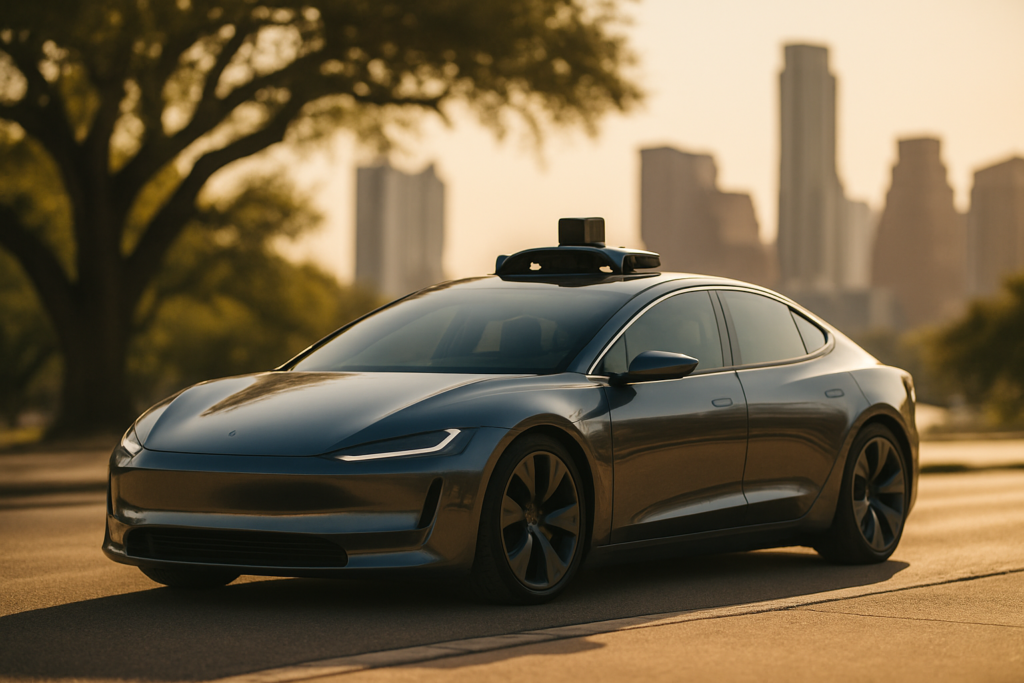
Public perception and community response
Your neighborhood’s acceptance of robotaxis depends on trust, demonstrated safety, and visible benefits. Community meetings, pilot programs, and local reporting shape perceptions.
This section examines how residents and riders view the technology and what influences public sentiment.
Trust through transparency and performance
Openness about incidents, testing data, and safety practices builds trust. When operators share clear performance metrics and responsiveness to incidents, you’re likelier to accept the service.
You’ll often see initial skepticism give way to cautious adoption when the system performs reliably and operators engage local stakeholders.
Nuisance concerns and mitigation
Noise, increased vehicle circulation, or mid-block stopping can generate complaints. Effective mitigation includes designated loading zones, quiet routing, and limits on repositioning miles.
If you live or work near busy pickup corridors, you may advocate for time-limited operations or special allowances during peak periods.
Data collection, privacy, and transparency
Robotaxis collect large volumes of sensor and user data to improve safety and navigation. How that data is stored, used, and shared matters for your privacy.
This section outlines typical data practices and what protections you should expect.
Types of data collected
Robotaxis capture video, telemetry, route history, and passenger metadata (pickup/drop-off). Operators may use anonymized data to improve models.
You should expect companies to state data retention policies, anonymization methods, and legal obligations when incidents occur.
Privacy safeguards and user controls
Strong privacy practices include encryption, limited retention, and explicit consent for certain data uses. Ideally, you’ll have controls over whether rides are recorded and transparent incident reporting.
Regulators and advocates push for clear policies so riders understand how their data is used and protected.
Insurance, liability, and incident response
When a vehicle is fully autonomous, determining fault and insurance responsibilities changes. You should understand who is responsible if something goes wrong.
This section covers typical frameworks and what you can expect during incidents.
Manufacturer/operator liability vs. rider responsibility
Liability may fall on the vehicle operator (the company running the fleet), the manufacturer, or be shared depending on local law and incident specifics. Insurance products are evolving to reflect these models.
If you’re involved in an incident, immediate steps include documenting, reporting through the app, and following operator instructions for incident investigation.
Incident response protocols
Operators typically have procedures for remote assistance and incident logging. In serious events, first responders are dispatched per normal emergency protocols.
You should expect a combination of automated logging, human review, and regulatory reporting to be part of how incidents are handled.
Legal challenges and litigation landscape
Autonomous vehicle deployment often triggers lawsuits and legal scrutiny. These can slow deployments, shift public opinion, and influence regulation.
This section highlights the types of legal issues you might see and how they affect service availability.
Common legal themes
Claims often involve product liability, privacy breaches, municipal authority over curb space, and labor disputes. These cases shape operational limits and disclosure requirements.
If legal challenges succeed in court or prompt new regulation, your access to robotaxi services may be temporarily restricted or rerouted.
The role of public hearings and policy forums
Municipal hearings give you a chance to voice concerns. Local policy decisions often arise from community feedback, technical testimony, and safety data.
Participating in these forums allows you to influence how robotaxi services integrate into Austin’s neighborhoods.
Environmental impact and sustainability
Robotaxis can reduce emissions if fleets are electric and operated efficiently; however, increased vehicle miles can offset benefits.
This section discusses the environmental trade-offs and what you can expect in terms of sustainability.
Electric fleet benefits
If Tesla’s robotaxi fleet is electric, local air quality improves compared to gasoline-powered ride-hailing. Reduced personal car ownership could also lower overall emissions.
You should consider overall system efficiency: routing algorithms and shared rides increase sustainability benefits.
Potential for increased vehicle miles
If empty repositioning or low-occupancy trips increase, net emissions may rise despite electric drivetrains. Managing fleet routing and pricing models is essential to realize environmental gains.
You might see policy nudges to encourage shared rides and reduce empty cruising.
Comparing Austin to other cities
Each city presents unique challenges for robotaxi deployments. Austin’s traffic patterns, event-driven congestion, and local governance differ from those of other tech-forward cities.
This comparative look helps you assess how well the service can integrate with Austin life.
| Factor | Austin | Dense urban city (example: San Francisco) | Suburban area |
|---|---|---|---|
| Traffic variability | High during events, university peak | Constant congestion, complex intersections | Lower density, higher speeds |
| Curb space availability | Limited in core entertainment zones | Highly contested, narrow sidewalks | More space but longer distances |
| Regulatory posture | State permissive, city-specific rules | Active local oversight and litigation | Varies; often favorable for testing |
| Micromobility interaction | Significant (bikes/scooters) | Heavy micromobility and pedestrian use | Lower micromobility intensity |
From your perspective, Austin’s profile means you’ll face irregular peaks and vibrant pedestrian activity that require careful robotaxi tuning.
Future prospects and scaling in Austin
Scaling a robotaxi service involves addressing regulation, infrastructure, rider trust, and economic viability. The next steps likely include pilot expansions, partnerships with public transit, and infrastructure investments.
This section explains what growth could look like for you as a rider or local resident.
Short-term milestones you might see
Look for expanded geofenced service areas, partnerships with event venues, and dedicated airport routes. You’ll observe iterative updates improving performance and coverage.
If you ride early, you’ll be part of a feedback loop that shapes how the service evolves.
Long-term city integration
Over time, robotaxis could integrate with transit systems, providing first/last-mile connections and reducing private car use. Policy decisions will influence whether robotaxis complement or compete with public transit.
You should weigh the convenience benefits against broader urban planning goals like equitable access and reduced congestion.
How to ride a Tesla Robotaxi in Austin (practical tips)
If a robotaxi service becomes available in Austin, here are practical tips to help you have a smooth trip.
This section is directly actionable to make your first rides more comfortable and efficient.
- Follow app pickup instructions precisely; they’re optimized for safety and legality.
- Maintain situational awareness when boarding and exiting (no human driver to help).
- Use the app’s communication features to report problems or request assistance.
- Consider riding during non-peak hours for smoother routes and faster pickups.
- Use shared-ride options if you want a cheaper, more sustainable trip.
These tips help you adapt to a different kind of mobility service where the vehicle itself is responsible for driving.
Frequently asked questions
You probably have specific questions about safety, availability, cost, and legality. This brief FAQ addresses the most common queries.
Are robotaxis safe?
Safety depends on the vehicle software, sensor reliability, and regulatory oversight. Operators are required to implement safeguards and report incidents. You should expect robotaxis to be conservative in uncertain situations.
Will robotaxis replace human drivers immediately?
No. Adoption is phased and depends on regulatory approvals, public trust, and economic factors. In many places, human-driven ride services will coexist with robotaxis for years.
How do I report a problem during a ride?
Use the ride app for immediate reporting. Operators typically have customer service and incident response channels that handle safety reports and refunds.
Do robotaxis collect video of passengers?
Operators collect vehicle sensor data primarily for navigation and safety. Policies vary on in-cabin recording; good practice includes encryption, limited retention, and clear passenger disclosures. Check the operator’s privacy terms before riding.
Final thoughts: what this means for you and your city
Seeing a Tesla Robotaxi navigate Austin streets represents a significant step toward automated urban mobility. For you, it can mean more travel options, potential cost savings, and a new kind of public space choreography involving vehicles, curbs, and sidewalks.
As you assess the benefits and risks, consider participating in public feedback processes, staying informed about local regulations, and trying services with cautious optimism. The balance between convenience, safety, and fairness will shape whether robotaxis become a positive force in Austin’s transportation future.
If you plan to ride, keep safety top of mind, follow app guidance, and share constructive feedback so the system can improve for everyone.