
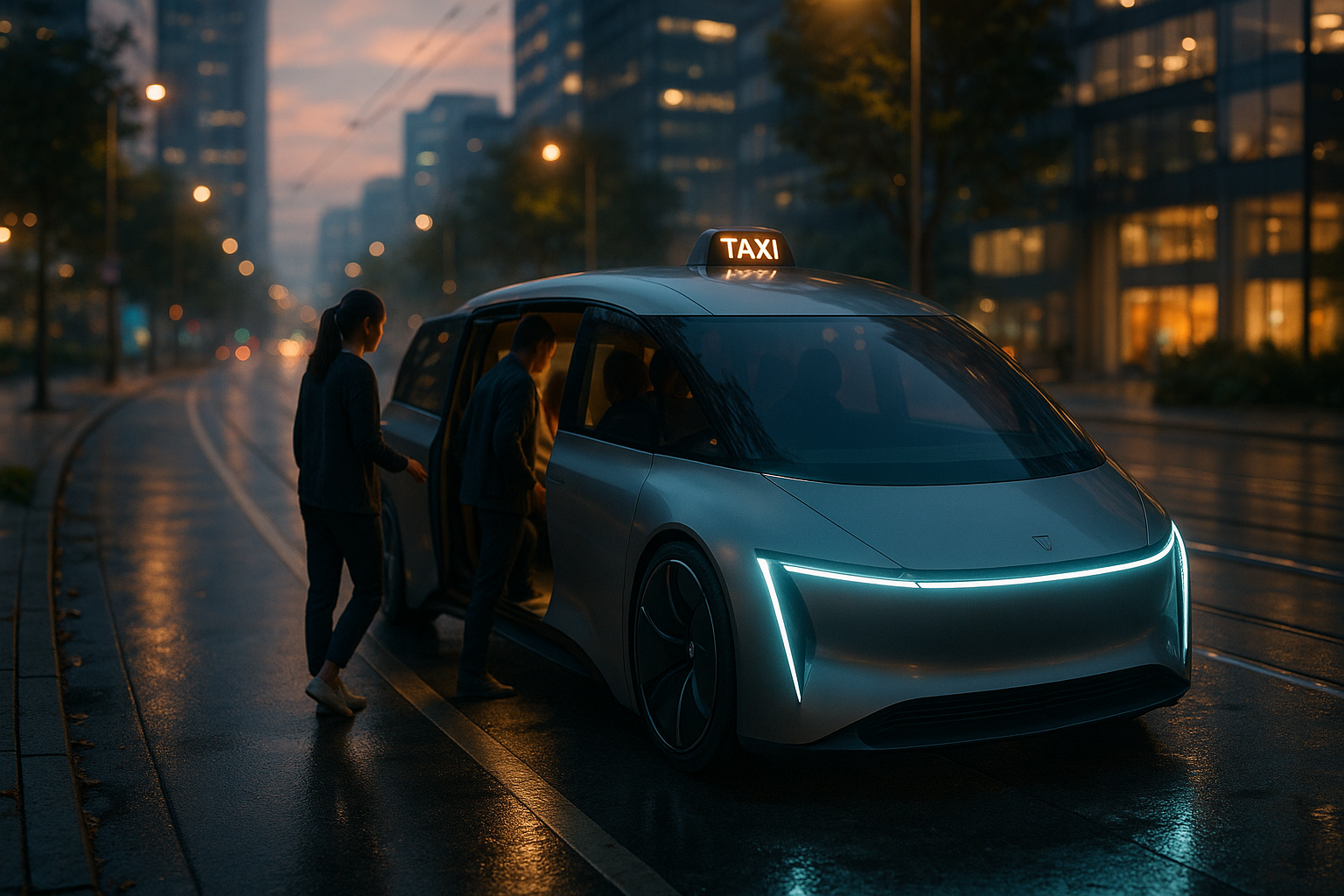
?Have you imagined how a driverless taxi might fit into your daily life and reshape your city?
robotaxi and the Future of Urban Mobility
You’re reading about a transformation that could change how you move, where you live, and what a city looks like. This article walks you through what robotaxis are, how they work, what companies like Tesla are proposing, and the broader effects you might experience as these systems scale.
What is a robotaxi?
A robotaxi is a vehicle that provides on-demand passenger transport without a human driver on board, typically operated by autonomous driving software and a centralized fleet management system. You can think of it as public transit that comes to you on demand, with rides charged per trip rather than per seat on a fixed route.
Levels of autonomy and relevance to robotaxis
Autonomous vehicles are classified by SAE levels 0 through 5, where Level 4 (L4) and Level 5 (L5) are most relevant to robotaxis. For L4, the vehicle can handle driving in defined conditions or geofenced areas without human intervention, while L5 would operate in any condition a human can; most commercial robotaxi services aim for L4 deployment first, because it’s more achievable and safer in controlled zones.
How robotaxis operate at a high level
A robotaxi fleet combines onboard sensors, machine learning-based perception, precise localization, and backend orchestration to accept requests, pick up passengers, and optimize routes. You’ll interact with these fleets through an app or integrated transport system, and the fleet operator will manage vehicle routing, charging, cleaning, and software updates.
Key technologies powering robotaxis
Understanding the technology helps you see why rollout timelines vary by company and region. Each subsystem contributes to safety, reliability, and user experience.
Sensors: cameras, lidar, radar, and ultrasonics
Robotaxis typically use a combination of cameras, lidar, radar, and ultrasonic sensors to perceive the environment. Cameras provide rich visual information, radar excels at detecting object velocity and works well in poor visibility, and lidar offers precise depth measurements that help create 3D maps of surroundings.
Perception and AI models
Perception stacks use neural networks to classify objects, track moving hazards, and predict trajectories of pedestrians, cyclists, and other vehicles. These AI models are trained on millions of miles of driving data to improve the vehicle’s ability to respond to complex scenes you encounter in the city.
Localization and mapping
High-definition maps and real-time localization let the vehicle know where it is within centimeters, which is crucial when you expect safe lane positioning and precise stops. Some systems rely on pre-built HD maps with frequent updates, while others emphasize real-time localization without dense mapping.
Compute hardware and software orchestration
Onboard compute handles latency-sensitive tasks like perception and control, while cloud infrastructure supports fleet routing, large-scale model training, and data storage. You’ll notice better responsiveness when compute is optimized for the specific models and sensor inputs used by the fleet.
Connectivity: V2X, 5G, and backend communication
Reliable, low-latency communication via 5G or other cellular networks enables features like remote assistance, map updates, and telemetry streaming. Vehicle-to-everything (V2X) communication may add extra safety by letting the fleet communicate with traffic lights, road sensors, and other infrastructure components.
Tesla robotaxi: vision and approach
Tesla has publicly stated ambitions to run a robotaxi service using its existing vehicle fleet and a camera-centric Full Self-Driving (FSD) stack. The company plans to leverage its large installed base of Teslas, millions of miles of driving data, and custom training hardware (Dojo) to create a scalable autonomous ride-hailing service.
Tesla’s hardware and software strategy
Tesla emphasizes a camera-first approach with neural networks trained on video data, augmented by radar in earlier models and ultrasonic sensors for short-range detection. You should note that Tesla designs its own chips for neural network inference and has repeatedly stated that large-scale fleet learning will be key to safety and continuous improvement.
Advantages and criticisms of Tesla’s approach
The camera-first strategy aims to mimic human visual perception, which proponents argue is scalable and cost-efficient for mass deployment, and the existing Tesla fleet offers a vast dataset for training. Critics, however, point out that camera-only systems may struggle in low-visibility conditions compared to lidar-equipped systems and question whether fleet-wide reliance on vehicles with human drivers yields sufficiently clean training labels for fully driverless operation.
Competitive landscape and major players
You’ll find several established firms and startups pursuing robotaxi services, each with different technical choices and deployment strategies. This variety reflects different risk tolerances, regulatory approaches, and target markets.
| Company | Approach | Deployment Status | Notable Cities/Regions |
|---|---|---|---|
| Waymo | Lidar + radar + cameras; extensive mapping | Commercial robo-taxi service (limited cities) | Phoenix, San Francisco (testing) |
| Cruise (GM) | Lidar + radar + cameras; rides in dense urban areas | Limited commercial operations | San Francisco (initial) |
| Tesla | Camera-first, neural networks, fleet-based training | Testing FSD; robotaxi plans announced | USA-focused; global ambitions |
| Baidu Apollo | Lidar/camera/radar hybrid; China-focused | Pilots and low-scale services | Beijing, other Chinese cities |
| AutoX, Pony.ai | Mixed sensor stacks | Pilots/commercial pilots | China, US pilot programs |
Urban mobility impacts
Robotaxis could influence many aspects of the urban transport ecosystem, and the outcomes will depend on pricing, regulation, and how cities adapt.
Potential reduction in personal vehicle ownership
If robotaxis become cheaper and more convenient than owning and maintaining a car, you may opt not to own one at all. This shift could free up capital that you currently spend on car payments, insurance, and parking fees.
Effects on public transit systems
Robotaxis could complement or compete with buses and rail depending on pricing and policy. You might benefit from improved first/last-mile connections to high-capacity transit, but if robotaxis lure riders away from mass transit, cities could face funding shortfalls for existing systems.
First/last mile solutions and accessibility
By connecting neighborhoods to transit hubs, robotaxis can extend the effective reach of lines and stations, making commuting smoother for you. For populations with mobility challenges, robotaxis could provide door-to-door service if vehicles are designed for accessibility.
Land use and parking changes
With fewer privately owned cars, you could see parking lots and garages converted into green space, housing, or commercial use. This change could alter neighborhood character and create opportunities for urban renewal where surface parking once dominated.
Economic and business models
How robotaxis are priced and operated will determine whether you save money or face higher costs for every trip.
Pricing models and user-facing fees
Operators may offer dynamic pricing, subscription models, or flat fares for certain routes, and you’ll likely see trial promotions to win adoption. Lower per-mile costs hinge on high vehicle utilization rates, minimal downtime, and efficient routing.
Fleet economics and utilization
A robotaxi’s viability depends on how often it carries paying passengers versus idles; higher utilization reduces per-trip costs. You could benefit if fleets are densely available and downtime for charging and maintenance is minimized through operational efficiency.
New markets and revenue streams
Beyond ride fares, operators may sell data, in-vehicle advertising, or tiered service packages with premium features. As a user, you might encounter bundled offerings that combine robotaxi rides with public transit passes or corporate mobility plans.
Impacts on traditional taxi and automotive industries
Traditional taxi drivers and vehicle manufacturers will face disruption: you may notice lower ride costs but also reduced employment in driver roles. Manufacturers can adapt by supplying purpose-built robotaxi vehicles or providing fleet management services.
Safety, regulation, and ethics
Safety is the linchpin of public acceptance, and regulations will shape how quickly you can access robotaxis in your city.
Safety metrics and validation approaches
Companies use miles driven, disengagement rates, and scenario-based testing to demonstrate safety, but you should scrutinize how statistics are measured and reported. Independent testing, simulation, and third-party audits can provide more confidence than proprietary metrics alone.
Regulatory frameworks and standards
Regulators will require operational permits, safety cases, and sometimes human oversight during initial deployments; you may see differing requirements across states and countries. Harmonized standards would help scale services across regions, reducing friction for operators and riders.
Liability and insurance considerations
When a robotaxi crashes, determining legal liability can be complex; you’ll want clarity on whether the manufacturer, software provider, fleet operator, or a third party is responsible. Insurance products will evolve to cover autonomous operation, likely combining elements of product liability and commercial fleet insurance.
Ethical decision-making and transparency
Autonomous systems can face moral dilemmas in unavoidable-accident scenarios, and you’ll want transparency about how decisions are made. Ethical frameworks, public consultation, and legal oversight can help align system behavior with societal expectations.
Technical challenges and limitations
Robotaxis must handle a wide array of demanding conditions that still pose research and engineering hurdles.
Edge cases and long-tail scenarios
Rare events—sudden road collapses, atypical pedestrian behavior, or unconventional roadwork—challenge current perception and planning systems. Continuous data collection and targeted simulation are required to improve handling of these long-tail scenarios.
Weather, lighting, and environmental stressors
Heavy rain, snow, fog, and glare can impair sensors; some systems degrade gracefully while others may restrict operation to safe conditions. You might experience sudden service unavailability in extreme weather unless operators plan for contingencies.
Scale, compute, and energy constraints
Processing vast quantities of sensor data in real time requires significant onboard power, affecting vehicle range and cooling. Efficient hardware and clever software design are necessary to balance compute needs with energy consumption.
Cybersecurity and privacy
Remote command, telemetry, and map data create attack surfaces you’re relying on fleet operators to secure. Privacy concerns also arise because vehicles collect video and location data; clear policies and strong encryption are essential.
Social and workforce impacts
You’ll see socioeconomic shifts as the industry matures, affecting employment, equity, and job design.
Job displacement and workforce transition
Professional drivers, dispatchers, and certain maintenance roles may shrink, but not disappear instantly; retraining and social safety nets will be necessary. If you work in affected roles, proactive reskilling programs will help you transition to new opportunities.
New jobs and skill requirements
Robotaxi operations create roles in fleet monitoring, remote assistance, map maintenance, data labeling, and AI development. You may find demand for technicians who understand electric vehicle maintenance and autonomous systems.
Equity, access, and affordability
Ensuring affordable access in underserved neighborhoods is a policy challenge; private operators may concentrate service in high-demand areas, leaving transit-poor regions behind. You can advocate for regulatory measures that require equitable service provision or subsidized fares for vulnerable populations.
Environmental implications
Robotaxis interact with the environment through energy use, emissions, and urban form changes.
Emissions and energy use
If robotaxis are electric, they can reduce tailpipe emissions and urban pollution, but total emissions depend on electricity sources and fleet utilization. You’ll have a greater environmental benefit if the grid is cleaner and vehicle utilization reduces the total number of vehicles needed.
Role of electrification
Most robotaxi fleets are expected to be electric due to lower operating costs and simpler drivetrain maintenance. Electrification paired with renewable energy sources amplifies environmental gains for your city.
Effects on congestion and noise
Depending on deployment density and routing policies, robotaxis could either reduce congestion by consolidating trips or increase it if empty vehicle repositioning is high. Quiet electric operation reduces noise pollution, which can improve the urban living experience.
User experience and design considerations
Your daily experience with robotaxis will depend on how operators design booking flows, in-vehicle interfaces, and accessibility features.
Accessibility and inclusivity design
Vehicles must accommodate wheelchairs, service animals, and assistive boarding for you or loved ones with mobility limitations. Clear booking options, driver-free assistance features, and human support channels will increase adoption among diverse user groups.
In-vehicle experience and services
You may expect comfortable seating, climate control, route transparency, and in-ride notifications about stops and estimated arrival times. Operators could also offer work-friendly interiors, entertainment, or privacy options depending on the service tier.
Building trust and encouraging adoption
Trust comes from consistent reliability, transparent safety records, and an intuitive interface that shows vehicle behavior and route choices. Early adopters and local pilots often shape public perception, so your firsthand experience and feedback can accelerate improvements.
Infrastructure requirements and smart city integration
Cities and operators need to coordinate on infrastructure to realize the full benefits of robotaxis.
Roadside infrastructure and intelligent intersections
Smart traffic signals, dedicated pick-up/drop-off zones, and embedded sensors can improve safety and efficiency when integrated with fleet systems. You might notice improved traffic flow in areas where such infrastructure is implemented.
Charging networks and maintenance hubs
Robotaxi fleets require accessible charging stations and centralized maintenance depots to minimize downtime and manage cleaning or repairs. Strategically placed hubs help reduce empty miles you’d otherwise pay for and ensure vehicles are ready when you need them.
Timeline and adoption scenarios
Predicting exact timing is difficult, but you can think in terms of scenarios that reflect different levels of technical and regulatory progress.
Optimistic scenario (near-term adoption, 5–10 years)
In this scenario, robust L4 systems operate in multiple cities with supportive regulation, affordable pricing, and high consumer acceptance. You may see rapid conversion of ride-hailing fleets to autonomous operation and significant shifts in car ownership trends.
Moderate scenario (gradual rollout, 10–20 years)
Here, robotaxi services expand in stages across select corridors and cities, with mixed adoption in suburban and rural areas. You’ll see coexistence with human-driven services and a slow but steady decline in personal vehicle ownership for urban residents.
Conservative scenario (slow adoption, 20+ years)
Significant technical, regulatory, or social barriers limit deployment, resulting in small-scale specialized services—such as campus shuttles or elderly transport—rather than widespread urban mobility transformation. In this case, you might only encounter robotaxis in a few pilot zones for many years.
| Scenario | Typical Timeline | Key Characteristics |
|---|---|---|
| Optimistic | 5–10 years | L4 fleets in many cities, low fares, high utilization |
| Moderate | 10–20 years | Gradual deployment, mixed ownership trends |
| Conservative | 20+ years | Limited pilots, narrow operational domains |
Policy recommendations and what you can do
You can influence how robotaxis shape your city by engaging with policymakers, industry, and civic groups. Thoughtful policy can maximize benefits while mitigating risks.
For policymakers and regulators
Adopt clear safety standards, encourage data sharing for independent validation, and require equitable service coverage in permits. You should support pilot programs, performance-based regulation, and flexible frameworks that enable innovation while protecting public interests.
For city planners and transit agencies
Coordinate robotaxi deployments with existing transit networks, reserve curb space for shared mobility, and plan for repurposing parking areas. If you manage a transit agency, consider partnerships that integrate robotaxis into first/last-mile strategies rather than seeing them only as competition.
For businesses and fleet operators
Design services that prioritize high utilization, transparent pricing, and accessibility; invest in cybersecurity and public reporting of safety metrics. You’re more likely to win public trust and regulatory approval if your operations are open to audits and third-party validation.
For individuals and community groups
Stay informed, participate in public consultations, and ask for equitable access and clear safety reporting from operators and regulators. You can also test pilot services and provide feedback that shapes vehicle design and policy choices.
Practical tips for riders when robotaxis become available
When you use a robotaxi, you’ll benefit from knowing how to make safe and efficient trips.
- Check vehicle identity and license plate through the app before boarding; this reduces the chance of boarding the wrong car.
- Follow in-app guidance for safe entry and exit, especially at busy curb zones, to avoid conflicts with other traffic.
- Use accessibility features or request human support in advance if you or a companion need assistance.
Common myths and clarifications
Your expectations may be influenced by media narratives; here are some common misconceptions clarified for you.
- Myth: Robotaxis will eliminate all traffic and commuting times. Reality: They can reduce some inefficiencies, but impacts on congestion depend on policy, pricing, and empty vehicle relocation strategies.
- Myth: Autonomous vehicles are infallible. Reality: They can significantly reduce human-error-caused crashes but still must manage complex edge cases; continuous improvement is required.
- Myth: All robotaxis will be identical. Reality: Different companies use varied sensor suites, business models, and geographic focuses, producing diverse service experiences.
Conclusion
As robotaxis move from pilots to broader services, you’ll witness shifts in how cities allocate space, how people get around, and how equitable access to mobility is governed. Your choices—whether to advocate for inclusive policies, try new services, or prepare for workforce changes—will matter in shaping outcomes that maximize public benefit and safety.
If you want, I can provide region-specific timelines, a deeper technical comparison of sensor stacks, or a checklist you can use when evaluating robotaxi services in your city.