
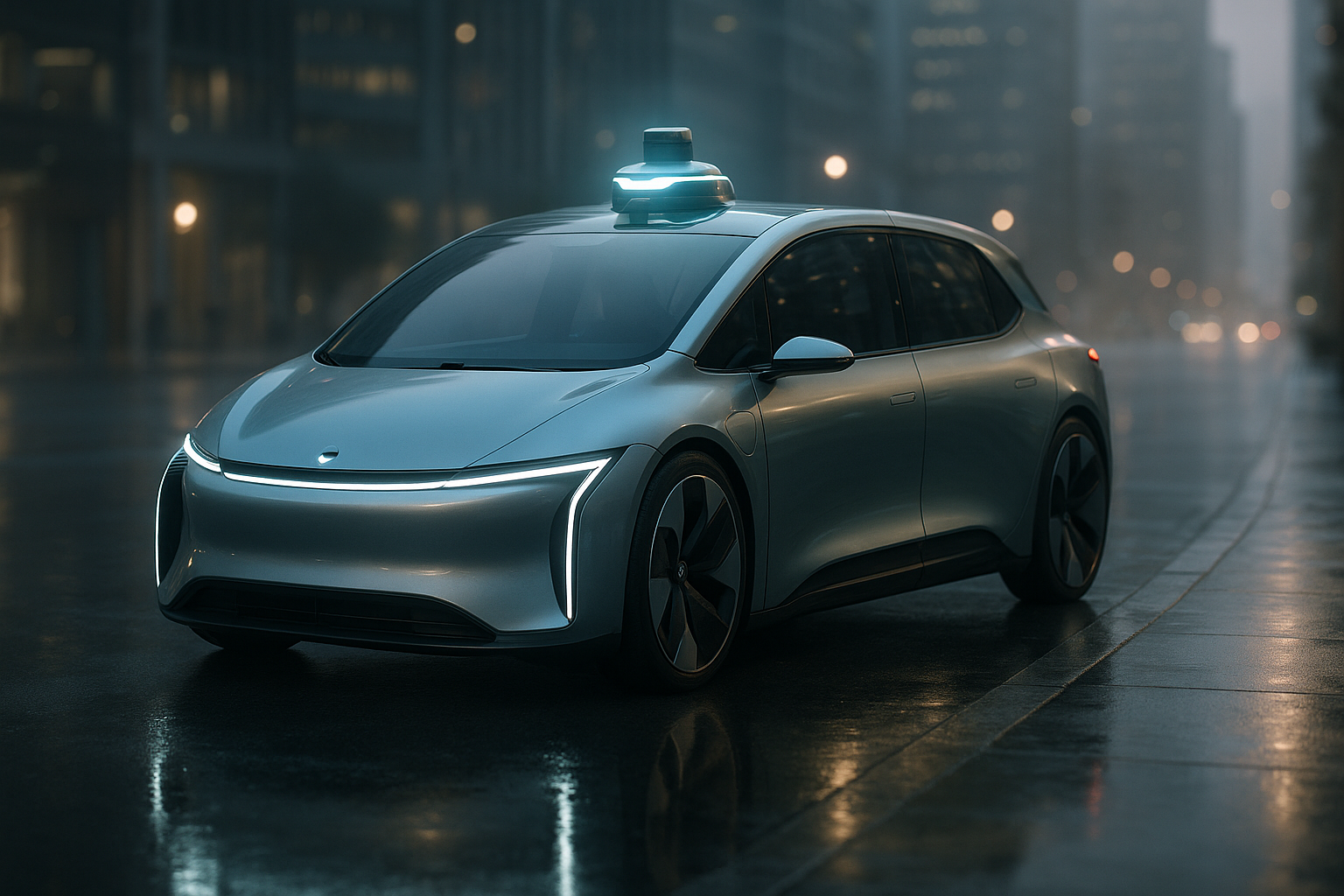
?Have you imagined stepping into a car that finds you, drives you, and drops you off while you read, work, or relax?
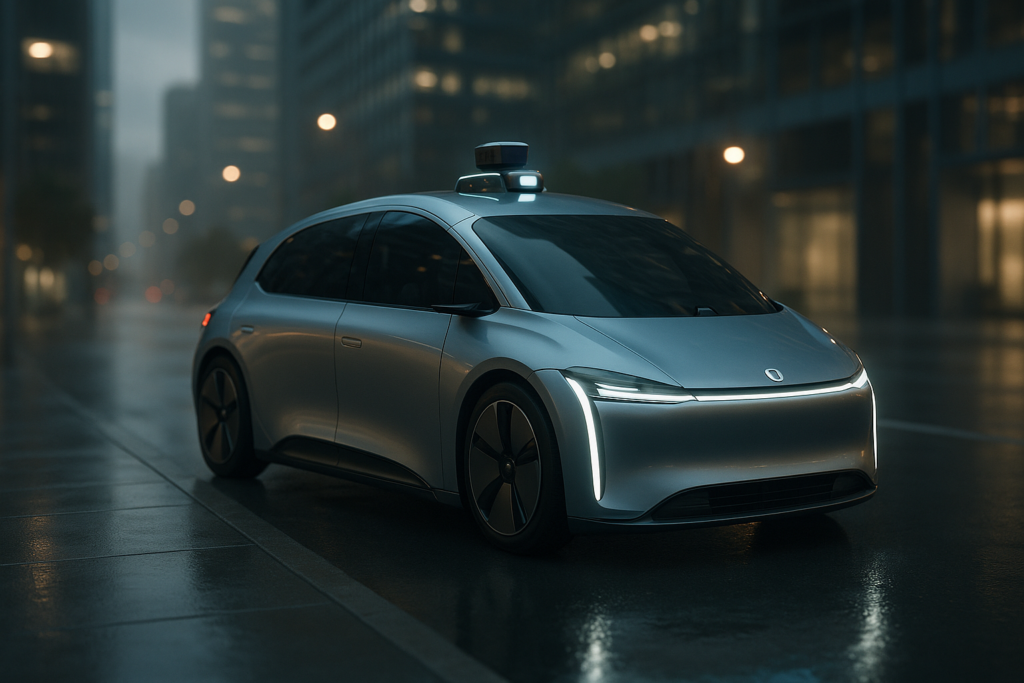
Robotaxi Mobility Revolution
You’re about to get a thorough, friendly walkthrough of the robotaxi mobility revolution and what it means for you, your city, and transportation as a whole. This article breaks down the technology, business models, safety concerns, regulatory landscape, environmental impacts, and the specific role Tesla aims to play in the robotaxi market. You’ll find clear explanations, comparisons, and practical implications so you can form an informed opinion or plan for the near future.
What is a robotaxi?
A robotaxi is an autonomous vehicle that operates as a taxi without a human driver. You’ll use a mobile app or another interface to request a ride; the vehicle arrives, navigates to your destination using onboard systems, and drops you off. Robotaxis can function within a restricted area under supervision or operate fully driverless in wide-ranging environments as technology and regulation permit.
Why robotaxis matter to you
Robotaxis promise to change how you move by potentially reducing costs, increasing availability, and providing new levels of convenience. If you live in an urban or suburban area, robotaxis could influence your transportation choices, commuting time, and even how you use personal vehicles.
Core technologies behind robotaxis
You’ll find that robotaxis rely on a stack of interdependent technologies to perceive the environment, make decisions, and control the vehicle. Each layer is crucial to safe and efficient operation.
Sensor systems: eyes and ears of the vehicle
Perception depends on sensors such as cameras, lidar, radar, ultrasonic sensors, and GPS. Cameras capture visual details, lidar maps depth precisely, radar helps detect objects in all weather, and GPS provides global positioning. Combined, these sensors enable the vehicle to sense lanes, pedestrians, other vehicles, and road markings.
Artificial intelligence and perception algorithms
AI models process raw sensor data to identify objects, predict their trajectories, and understand the semantic layout of the scene. You’ll see convolutional neural networks for vision tasks, recurrent networks for temporal prediction, and fusion architectures that combine multiple sensor modalities. These models continuously learn from fleet data to improve performance.
Localization and mapping
Highly precise localization allows a robotaxi to know its position within centimeters. High-definition maps augment onboard sensing by providing detailed road geometry, lane-level information, and known static features. Simultaneous Localization and Mapping (SLAM) techniques help the vehicle update local maps in real time.
Planning, decision-making, and control
Once the environment is understood, planning algorithms decide the best trajectory to reach a destination while respecting rules, avoiding collisions, and providing comfort. Control systems convert planned trajectories into steering, braking, and acceleration commands. You’ll notice emphasis on both safety (conservative planning) and user experience (comfort and minimal delays).
Connectivity and fleet management
Robotaxis communicate with backend servers for routing, fleet coordination, software updates, and telemetry. Connectivity enables centralized dispatch, dynamic pricing, and data collection for model improvement. In some designs, low-latency vehicle-to-infrastructure (V2I) and vehicle-to-vehicle (V2V) communications further enhance situational awareness.
Safety and validation
You’ll naturally ask: are robotaxis safe? Safety is the top priority, and companies use multiple approaches to validate systems.
Redundancy and fail-safe design
Critical systems are duplicated or triplicated so that failure of one component doesn’t compromise safety. Redundant sensors, parallel computing stacks, and independent braking systems are typical features.
Simulation and real-world testing
Companies run millions of simulated miles to test rare scenarios that would take years to encounter in real life. Real-world testing complements simulation to validate behavior in diverse environments and weather conditions. Regulatory bodies often require documented testing and reporting.
Regulatory and certification pathways
You’ll face different regulatory frameworks depending on jurisdiction. Some regions permit pilot programs, others require a safety driver during trials, and a few allow fully driverless operation under strict conditions. Certification pathways are still evolving to match the technology’s pace.
Robotaxi business models and economics
You’ll want to understand how robotaxis become economically viable. Several models and revenue streams are emerging.
On-demand ride-hailing
Similar to current ride-hailing apps, on-demand robotaxi services let you request rides per trip. Without a driver, costs per mile could drop substantially, allowing lower fares and more frequent use.
Subscription and pooled services
You may subscribe to unlimited or fixed-ride packages, or choose pooled rides that reduce per-passenger cost. Pooled robotaxis can further improve fleet utilization and lower environmental impacts.
Fleet ownership and partnerships
Companies can own and operate fleets directly, partner with fleet operators, or license software to automakers. You might encounter robotaxi services run by automakers, tech companies, or municipal transit partnerships.
Ancillary revenue
Robotaxi operators can generate additional revenue through in-vehicle advertising, data analytics, and partnerships with local businesses. You may see promotions or targeted offers during your ride.
Tesla and the robotaxi vision
Tesla has positioned itself as a major player in the robotaxi space. You’ll want clarity on what Tesla brings and what remains uncertain.
Tesla’s approach to autonomy
Tesla emphasizes vision-based systems using cameras and neural networks, aiming to minimize reliance on lidar. The company’s Full Self-Driving (FSD) suite and Autopilot hardware are designed to enable progressively more autonomous functionality through software updates and fleet learning.
Robotaxi promises and timeline
Tesla has publicly announced ambitions for a robotaxi network that utilizes customer-owned vehicles when idle, effectively turning them into part of a shared fleet. You may see optimistic timelines in public statements, but the path to fully driverless, widespread deployment depends on technical success and regulatory approvals.
Strengths of Tesla’s strategy
Tesla has a large fleet of vehicles on the road, which collects massive amounts of driving data. You’ll recognize the value of fleet scale for continuous model improvement. Tesla’s integrated hardware and software approach allows rapid OTA (over-the-air) updates and feature rollouts.
Challenges and criticisms
Tesla’s reliance on cameras, while cost-effective, faces skepticism from some experts who favor adding lidar for redundancy. You’ll also note that FSD has been controversial in terms of performance consistency and regulatory scrutiny. Tesla’s roadmap for a robotaxi network is ambitious and will require rigorous safety validation and regulatory engagement.
Comparative overview: major robotaxi players
You’ll benefit from a quick comparison of leading players to see differences in strategy and technology.
| Company | Primary Approach | Key Technologies | Deployment Status |
|---|---|---|---|
| Tesla | Vision-based, fleet learning | Cameras, radar (legacy), neural networks | Consumer vehicles with Autopilot/FSD beta; robotaxi plans |
| Waymo (Alphabet) | Lidar-centric, conservative | Lidar, cameras, radar, HD maps | Commercial robotaxi service in select cities |
| Cruise (GM) | Lidar + camera + radar | Lidar, cameras, radar, GM platform | Pilots and limited service in U.S. cities |
| Baidu Apollo | Hybrid approach | Lidar/camera/radar, cloud mapping | Tests and pilots in China |
| Mobileye (Intel) | Camera-first with redundant hardware | Camera arrays, radar, mapping | Partnerships and pilot programs |
You’ll notice that approaches vary: some favor lidar for precise depth sensing, while others focus on camera-based systems with different trade-offs in performance, cost, and scalability.
User experience: what it will feel like for you
A robotaxi ride should feel familiar yet different from current mobility options. Here’s what you can expect.
Booking and pickup
You’ll use an app to request a ride, see ETAs, and track the vehicle. Pickup points might be optimized to reduce delays and improve safety—curbside rules and designated robotaxi bays can make this smoother.
In-vehicle experience
Inside, you’ll find comfortable seating, adaptive climate control, and digital interfaces. If you’re alone, the vehicle may prioritize speed; if pooled, routing will reflect multiple stops. Privacy and access to charging or media options may vary by operator.
Payment and receipts
You’ll be charged automatically through the app, with itemized receipts and options for cashless payment. Dynamic pricing could apply depending on demand, though subscription models may offer predictable costs.
Accessibility and inclusiveness
Robotaxi operators will need to ensure accessibility for riders with mobility challenges, service animals, or special needs. Vehicle design, pickup curb management, and assistive services will be essential for equitable access.
Safety, ethics, and public acceptance
You’ll want to understand how safety and ethics interplay with adoption. Public trust will be earned through transparent practices and consistent performance.
Transparency and incident reporting
Operators and regulators should maintain transparent incident reporting and publicly available safety metrics. You’ll be more comfortable using services that publish safety data and corrective measures.
Ethical decision-making frameworks
Autonomous systems may face situations requiring ethical judgments (e.g., choosing between collision options). Developers implement decision frameworks that prioritize minimizing harm, but you’ll want clear policy and oversight to ensure accountability.
Public perception and behavior
Your comfort with robotaxis depends on consistent reliability and cultural readiness. Educational campaigns, live demonstrations, and community engagement help build familiarity and trust.
Environmental and urban impacts
Robotaxis can influence emissions, congestion, land use, and public transit systems. You’ll see both potential benefits and risks.
Potential environmental benefits
Shared robotaxis could reduce the number of private cars, raise average vehicle occupancy, and optimize routing, leading to fewer vehicle miles traveled (VMT) and lower emissions, especially if fleets are electric.
Risks of increased vehicle miles
If robotaxis are cheaper and more convenient than mass transit, they may induce new travel demand that increases total VMT and congestion. You’ll want policies that encourage pooling and integration with transit.
Urban design and parking
Reduced need for parking in prime locations could free up land for housing, parks, or commercial use. You’ll notice changes in street design as cities adapt to more curbside activity and potential robotaxi lanes.
Regulatory and legal landscape
Regulations are crucial for safety, liability, and public trust. You’ll find a patchwork of policies across regions.
Liability and insurance
Determining fault in a crash involving a robotaxi can be complex. Liability may fall on vehicle manufacturers, software providers, fleet operators, or riders depending on the situation and contracts. Insurance models will evolve to reflect this complexity.
Data privacy and security
Robotaxis collect rich sensor data about passengers and surroundings. You’ll expect robust privacy controls, data minimization, and secure storage. Clear rules about data sharing and retention will be essential.
Local control and pilot programs
Cities often assert local control over curb use, permits, and operational hours for robotaxi pilots. You’ll see phased rollouts that allow regulators to monitor impacts and refine rules before wider deployment.
Implementation challenges and technological gaps
Several barriers remain before robotaxis become ubiquitous. You’ll want to understand the major challenges.
Edge-case handling
Rare events—like unusual pedestrian behavior or construction zones—challenge AI systems. Companies must handle edge cases reliably to avoid dangerous or embarrassing situations for riders.
Adverse weather and road conditions
Heavy rain, snow, fog, and poorly marked roads complicate perception and localization. You’ll notice that robust all-weather performance is still a work in progress for many systems.
Scalability and cost
Building and maintaining large autonomous fleets requires capital, maintenance infrastructure, and charging or fueling networks. Achieving profitability depends on utilization rates and operational efficiency.
Human behavior prediction
Predicting the intent of pedestrians, cyclists, and other drivers is probabilistic. You’ll see ongoing research into better models to predict behavior and adapt conservatively.
Fleet operations and maintenance
Operational excellence determines whether robotaxi services are reliable and economical for you.
Vehicle maintenance and uptime
Autonomous fleets require frequent diagnostics, preventive maintenance, and rapid repairs. You’ll expect minimal downtime and clear communication when service disruptions occur.
Charging and energy management (for electric robotaxis)
If fleets are electric, charging infrastructure, schedule optimization, and battery health management become critical. You’ll notice operators balance charging costs, vehicle availability, and peak demand.
Cleaning, sanitization, and customer service
Maintaining cleanliness and addressing in-ride issues (lost items, safety concerns) will require human teams even in driverless services. You’ll likely have access to customer support through apps or call centers.
Integration with public transit
Robotaxis can complement existing transit systems, but proper integration is essential to avoid fragmentation.
First-mile/last-mile solutions
You’ll find robotaxis particularly useful for bridging the gap between transit hubs and final destinations. Proper fares and scheduling can encourage multimodal trips that reduce car dependence.
Shared mobility ecosystems
Cities can integrate robotaxis into unified mobility platforms that include buses, trains, bikeshare, and scooters. You’ll benefit from single-payment systems, coordinated timetables, and pooled services.
Economic and labor impacts
Robotaxis will shift labor markets and economic structures. You’ll need to consider both opportunities and disruptions.
Displacement of driving jobs
Ride-hailing and taxi drivers may face reduced demand as fleets become automated. You’ll see calls for workforce retraining, transition programs, and social safety nets.
New job categories
At the same time, new roles will emerge in fleet maintenance, remote supervision, operations, and data science. You may find opportunities in vehicle servicing, infrastructure upgrades, and regulatory compliance.
Local economic effects
Cities may see changes in how commercial zones and retail locations perform as mobility patterns evolve. You’ll need to adapt business strategies and property planning accordingly.
Case studies and early deployments
Real-world pilots give you insight into what works and what doesn’t.
Waymo’s commercial services
Waymo operates limited robotaxi services in select cities, emphasizing safety and conservative deployment. You’ll observe rigorous testing, detailed mapping, and partnership with local authorities.
Cruise and city pilots
Cruise has conducted pilot programs in major U.S. cities, focusing on mixed-traffic scenarios. You’ll note regulatory negotiations and community engagement as part of scaling.
Tesla FSD beta and fleet learning
Tesla’s FSD beta invited real drivers to test autopilot features on public roads, generating massive datasets. If Tesla advances to a commercial robotaxi, its large fleet data will be a key asset.
Timeline and future outlook
Predicting timeframes is difficult, but you’ll benefit from a realistic perspective.
Short term (1–3 years)
Expect more supervised pilot programs, expanded geofenced services, and incremental improvements in driver assistance. You’ll likely see more human-in-the-loop safety drivers and limited commercial rollouts.
Medium term (3–7 years)
If technical and regulatory hurdles are addressed, robotaxi fleets could expand to multiple cities with broader coverage. You’ll notice more electric robotaxi fleets and improved ride-pooling adoption.
Long term (7+ years)
Widespread adoption depends on societal acceptance, robust safety records, and supportive policies. You could live in cities where robotaxis are a common choice, integrated with mass transit and urban planning.
Practical considerations for riders
If you plan to use robotaxis, here are things you’ll want to keep in mind.
Safety checklists
Before using a new robotaxi service, you may want to review safety records, insurance coverage, and incident response protocols. You’ll also consider personal security measures such as sharing ride details with contacts.
Accessibility needs
If you rely on accessibility accommodations, check whether the service supports wheelchair access, assistance devices, or special pickup procedures. You’ll want operators to adhere to accessibility regulations.
Cost and fare transparency
Look for clear fare structures, cancellation policies, and refund mechanisms. You’ll appreciate services that publish price estimates and surge rules.
Frequently asked questions (FAQ)
You’ll likely have common questions about robotaxis; here are concise answers.
- Will robotaxis replace personal cars? They may reduce personal car ownership in dense urban areas, but preferences and geographic differences will influence adoption.
- Are robotaxis safer than human drivers? Potentially, due to reduced human error, but safety depends on technology maturity and proper regulation.
- How do robotaxis handle emergencies? Operators should have remote support, fail-safe systems, and predefined protocols for emergency services.
- Will robotaxis be expensive? Costs could drop over time, but initial services may be priced higher until scale and efficiency improve.
Comparison: Robotaxi advantages and risks
| Topic | Advantages for you | Risks/Concerns |
|---|---|---|
| Cost | Lower fares due to no driver | Hidden fees, dynamic pricing |
| Convenience | On-demand service, less parking hassle | Pickup logistics in dense areas |
| Safety | Reduced human error, redundancy | Edge-case failures, system bugs |
| Environment | Potential lower emissions with EV fleets | Increased VMT if unregulated |
| Accessibility | New options for non-drivers | Need for inclusive vehicle design |
You’ll see that benefits are balanced by risks that require policy, technology, and business model alignment.
How cities should prepare
Municipalities will play a key role in ensuring robotaxis improve mobility equitably.
Policy and planning
You’ll encourage policies that promote pooling, integration with transit, and curb management. Pilot zones and performance-based permits help assess impacts.
Infrastructure investments
Investments in charging stations, smart curb infrastructure, and digital platforms will support efficient operations. You’ll also advocate for clear signage and designated pickup/drop-off areas.
Stakeholder collaboration
Cities, operators, transit agencies, and communities should coordinate on goals, data sharing, and public communication. You’ll see better outcomes when multiple stakeholders align.
Final thoughts
You’re witnessing a transformative period in mobility, where autonomy, electrification, and shared services converge. Robotaxis offer the promise of greater convenience, potential cost savings, and environmental benefits, but they also raise important technical, social, and regulatory questions. Understanding the trade-offs helps you make informed choices as services roll out.
If you’re planning to use robotaxis, stay informed about safety records, privacy policies, and local regulations. If you’re a policymaker or planner, focus on integration, equity, and robust oversight. And if you follow Tesla’s robotaxi ambitions, watch for continued software updates, fleet data advantages, and regulatory developments that will shape how quickly and widely robotaxis become part of everyday mobility.
You’ve now got a comprehensive view of the robotaxi mobility revolution, including where Tesla fits into the picture. If you have specific questions—about safety metrics, how robotaxi pricing might work in your city, or Tesla’s technical stack—ask and you’ll get tailored details.