
What would your city look like if every trip could be safer, quieter, and more efficient because a purpose-built autonomous vehicle handled it from curb to curb?
zoox autonomous mobility vision
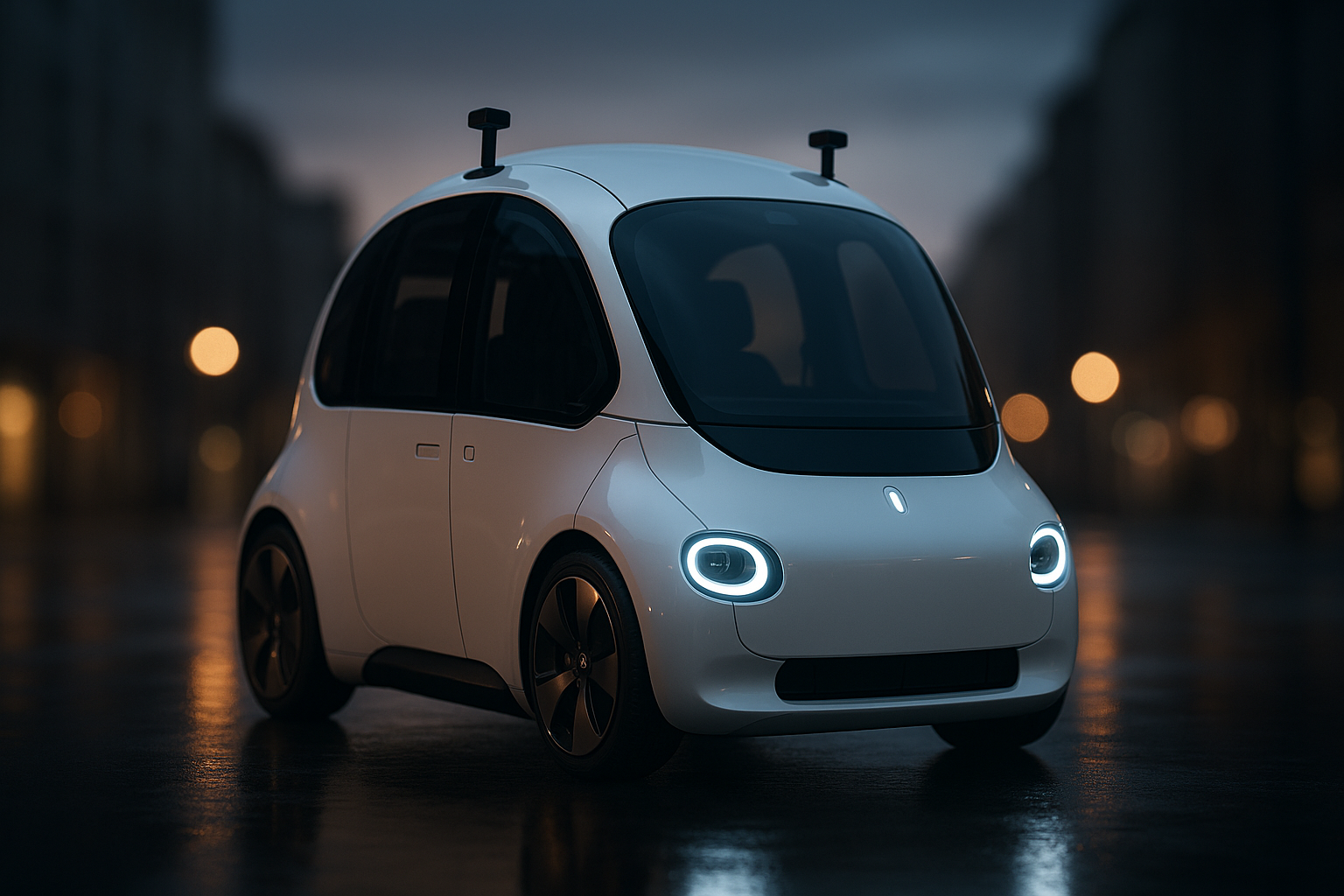
Zoox’s autonomous mobility vision centers on reimagining transportation for people rather than adapting cars to drive themselves. You get a different paradigm: symmetric, bidirectional vehicles built from the ground up for shared, driverless mobility that change how you move through dense urban environments.
What is Zoox?
Zoox is an autonomous vehicle company focused on creating a fully autonomous, purpose-built robotaxi and the systems that operate it. You should think of Zoox not as retrofitting a conventional car with autonomy, but as designing an entirely new mobility product intended to redefine ride experience and urban traffic.
Zoox’s mission and core vision
Zoox aims to make cities safer, more efficient, and more enjoyable by replacing individual car ownership with on-demand autonomous mobility services. You are meant to benefit from vehicles optimized for comfort, accessibility, safety, and dense-city operation rather than mere point-to-point driving.
Why purpose-built matters
Designing a purpose-built robotaxi lets Zoox optimize vehicle geometry, sensor placement, and passenger experience without constraints from legacy design. When you ride in a purpose-built vehicle, every feature — from seating and ingress/egress to visibility and crash structure — is tailored to autonomous operation and shared use.
Vehicle design philosophy
Zoox’s vehicle design philosophy emphasizes symmetry, safety, and passenger experience to better suit autonomous, shared mobility needs. You experience a vehicle that looks and behaves differently from conventional cars.
Symmetry and bidirectionality
The Zoox vehicle is bidirectional, meaning it can drive forward or backward with equal competence, enabling efficient shuttle-like operations without turning loops. For you, this reduces deadhead time, allows flexible pick-up/drop-off maneuvers, and minimizes complex urban turning requirements.
Cabin-first approach
Rather than centering design around a driver, the Zoox cabin focuses on passenger comfort, ergonomics, and social space. You access flat-floor interiors, face-to-face seating options, and features intended to enhance the ride experience for multiple passengers.
Crashworthiness and active/passive safety
Safety engineering integrates a reinforced structure, crumple zones, and advanced sensor fusion to manage collision risks. You benefit from both passive protections and active systems designed to avoid hazards through predictive perception and planning.
Technical architecture overview
Zoox combines hardware, perception, planning, and fleet management into an end-to-end architecture. You interact with the visible product — the vehicle and app — but the invisible systems coordinate millions of data points to make trips safe and reliable.
Sensor suite and redundancy
Zoox uses a complementary sensor suite — lidar, cameras, radar, and IMU/GNSS — with overlapping fields of view for redundancy. You get robust perception across lighting and weather conditions because multiple sensor types validate the same scene information.
Table: Typical sensor roles and strengths
| Sensor type | Primary role | Strengths | Limitations |
|---|---|---|---|
| Lidar | 3D range & object shape | Precise distance, works in darkness | Sensitivity to weather, cost |
| Cameras | Object classification, semantic context | Rich visual detail, color info | Low-light performance, glare |
| Radar | Velocity & range in adverse weather | Penetrates fog/rain, good velocity | Lower resolution for shape |
| IMU / GNSS | Motion and global pose | Accurate short-term motion tracking | GNSS degradation in urban canyons |
Compute platform and real-time systems
Zoox integrates high-performance compute for perception and planning with real-time constraints to ensure safety-critical decisions run deterministically. You depend on low-latency inference for braking, steering, and trajectory updates in urban interactions.
Mapping and localization
Highly accurate maps and localization systems allow the vehicle to position itself precisely within the urban environment. You may not notice mapping details, but they provide context like lane structure, traffic rules, and persistent obstacles that shape vehicle behavior.
Perception and scene understanding
Algorithms convert sensor data into a 3D representation of the environment, identify dynamic agents (pedestrians, cyclists, vehicles), classify objects, and infer intent. You benefit when the vehicle anticipates complex situations, such as a jogger stepping off a curb or someone reversing from a parking spot.
Prediction and behavior modeling
Zoox models probable future trajectories of dynamic agents and reasons about constraints and safety margins. The vehicle must weigh multiple plausible futures so you experience smooth and anticipatory rather than reactive maneuvering.
Motion planning and control
Motion planning optimizes safe, comfortable trajectories subject to kinematic and dynamic constraints of the vehicle. You notice this as smooth acceleration, confident lane positioning, and cautious yields in pedestrian-heavy areas.
Safety and redundancy
Safety is foundational to Zoox’s vision, and multiple layers of redundancy protect you from single-point failures. These layers include hardware duplication, software failover strategies, and rigorous verification processes.
Hardware redundancy
Critical components — compute modules, braking actuators, and sensor arrays — are duplicated so the vehicle can continue safe operation if one element fails. You want to feel secure knowing a failure doesn’t lead to immediate loss of control.
Software validation and formal methods
Zoox leverages extensive simulation, scenario-based testing, and formal verification methods for safety-critical modules. By thoroughly validating decision-making logic, you reduce the risk of unexpected or unsafe behavior in complex urban contexts.
Functional safety standards and certification
The company aligns its design with automotive safety frameworks such as ISO 26262 and develops processes around Safety of the Intended Functionality (SOTIF). You gain confidence from compliance with industry-recognized safety practices and continuous audits.
Simulation, testing, and validation
You should understand that large-scale simulation complements on-road testing to cover millions of scenarios too rare or dangerous to reproduce physically. Zoox uses a mix of simulated environments, test tracks, and real-world pilots to validate systems.
Virtual scenario coverage
Simulators let Zoox test edge cases, rare events, and adversarial conditions in a controlled setting. You indirectly benefit because simulation enables thousands of permutations of pedestrian and vehicle behaviors that would be infeasible to test live.
Closed-course and public-road testing
Physical testing on tracks and public roads verifies real-world sensor performance and integration issues. When you share the road with test vehicles, regulators and engineers monitor outcomes to ensure public safety.
Data-driven continuous improvement
Operational vehicles collect anonymized telemetry to refine perception, prediction, and planning models over time. Your experience improves as models learn from diverse urban conditions, rare events, and driver/passenger feedback.
Operational design domain (ODD) and geofencing
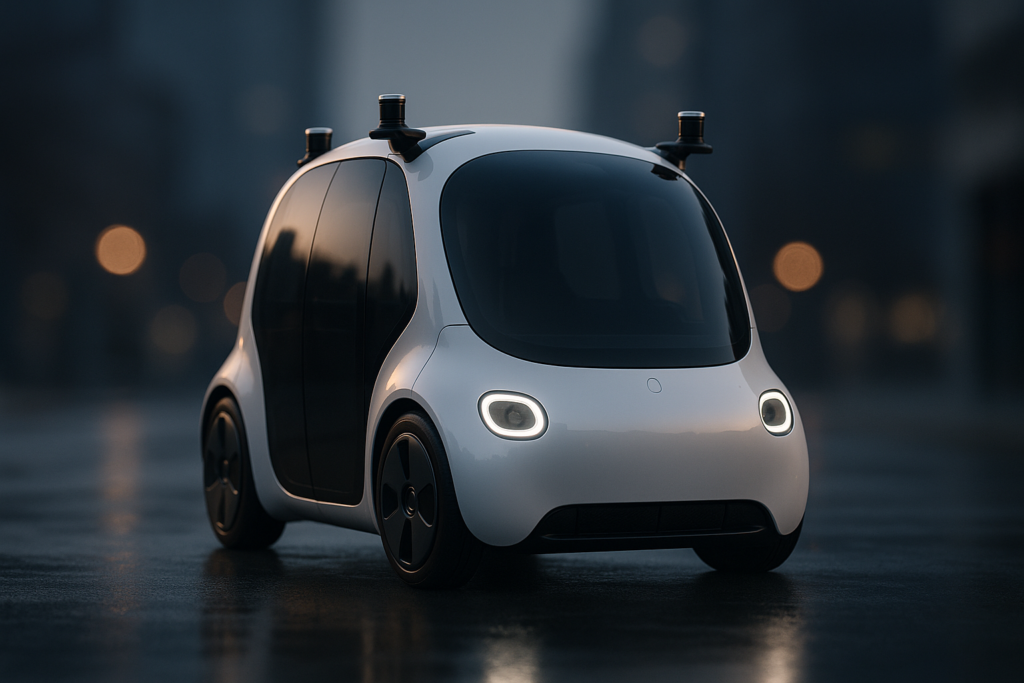
Zoox defines specific operating conditions — such as city centers, certain speed limits, and mapped areas — where its system guarantees performance. You will often see robotaxi services limited to particular neighborhoods while capabilities expand.
Why ODD matters
Operating within an ODD helps maintain predictable performance by restricting scenarios to those the system has been validated for. You receive a safer service because the vehicle won’t attempt maneuvers outside its proven envelope.
Incremental ODD expansion
As reliability increases, Zoox can expand coverage to more complex streets or higher speeds. You can expect gradual growth of service areas rather than sudden, uncontrolled expansion, ensuring reliability scales with capability.
User experience and human factors
Zoox places emphasis on passenger comfort, accessibility, and transparency to earn your trust with a new form of mobility. The experience aims to be intuitive and pleasant to foster daily adoption.
Booking, pick-up, and drop-off
Service apps and dispatch systems optimize pick-ups to minimize waiting time and walking distance. For you, this means clear arrival notifications, designated curb areas, and assistance features for seamless entry and exit.
Comfort and accessibility features
Vehicles include low floors, wide doors, and stowage for luggage or accessible seating configurations. If you have mobility needs, these features make autonomous rides more practical and inclusive.
In-vehicle information and control
While the vehicle is fully autonomous, passengers are provided with clear information about route progress, estimated arrival, and safety notices. You also have simple controls to adjust climate or communicate with remote support if needed.
Fleet operations and maintenance
Managing an autonomous fleet involves unique logistical and technical workflows to keep vehicles operational, safe, and available to you whenever needed.
Predictive maintenance and telematics
Continuous remote monitoring flags wear and component degradation before failures occur, enabling proactive maintenance. You benefit from higher vehicle uptime and fewer disruptions in service.
Charging, energy management, and scheduling
Zoox coordinates charging schedules to keep vehicles available while optimizing fleet energy costs and battery life. You may notice slightly different vehicle availability patterns as the system balances charging needs with demand.
Remote support and human oversight
A staffed operations center provides remote supervision, human-in-the-loop interventions for exceptions, and customer support. If you encounter a problem in-vehicle, remote operators can assist or take control for safe resolution.
Energy, electrification, and sustainability
Zoox’s vehicles are electric, aligning with goals to reduce emissions, noise pollution, and operating costs. You contribute to a smaller urban carbon footprint when shared autonomous electric vehicles replace many internal-combustion trips.
Efficiency gains through shared mobility
When you share rides or choose on-demand robotaxi services, fewer vehicles are needed to meet travel demand, reducing total emissions and space devoted to parking. The net environmental effect depends on ridership rates and energy sources, but potential benefits are significant.
Battery management and lifecycle
Battery health monitoring, optimized charging strategies, and end-of-life recycling are parts of sustainable fleet operations. You can expect fleet operators to address battery lifecycle to minimize environmental impacts.
Regulatory environment and public policy
The regulatory landscape shapes where and how Zoox can operate, and policy decisions will influence the speed of deployment and the features offered to you.
Licensing and operational permits
Autonomous vehicle deployment requires approvals from federal, state, and local authorities for testing and passenger service. You’ll see pilots and phased deployments as regulators and companies validate safety and public benefits.
Standards and liability
Regulators work to clarify liability, cybersecurity, and data privacy frameworks that govern autonomous services. You should look for transparency in incident reporting and responsible data handling to maintain trust.
Urban planning and curb management
Cities must adapt policies for curb use, parking, and traffic flow to accommodate robotaxis. You may notice new curb zones or priority lanes as cities integrate autonomous fleets into transportation networks.

Ethical considerations and public acceptance
You as a rider and community member will weigh safety, data privacy, equity, and accessibility when accepting autonomous mobility. Ethical design choices shape whether these services receive broad support.
Privacy and data handling
Zoox collects sensor and trip data to improve systems, but you will expect robust anonymization and clear policies about data use. Trust requires both technological safeguards and transparent governance.
Equitable access
Ensuring services serve diverse communities and income levels affects social acceptance and overall benefits. You may see programs that prioritize underserved areas or subsidized rides to maximize public value.
Decision-making in unavoidable-risk scenarios
Autonomous systems must follow consistent policies when confronting rare moral dilemmas. You want clarity on how safety priorities are encoded into behavior, and regulators will expect documented reasoning and public accountability.
Competitive landscape and market positioning
Zoox competes with legacy automakers, tech giants, and other AV startups that pursue different strategies — retrofit vs. purpose-built, robotaxi vs. driver-assisted vehicles. Your choices will reflect regional availability and business models.
Differentiation through design and service
Zoox’s focus on a purpose-built robotaxi and an integrated mobility service positions it differently than companies that retrofit sedans for driverless operation. You’ll see distinct user experiences depending on which approach a provider takes.
Table: High-level comparison of AV approaches
| Approach | Typical vehicle | Strengths | Trade-offs |
|---|---|---|---|
| Purpose-built robotaxi | Symmetric, no driver controls | Optimized passenger experience and operations | Longer development cycle, higher upfront cost |
| Retrofit / driverless kit | Conventional cars | Faster to deploy, leverages existing supply chain | Compromises in design and efficiency |
| Driver-assist scaling | Human-driven cars with ADAS | Incremental safety benefits, regulatory familiarity | Limited autonomy, continued driver reliance |
Market dynamics and partnerships
You’ll see collaborations between AV developers, cities, mobility operators, ride-hailing platforms, and utilities to align infrastructure, regulatory approvals, and business operations. Strategic partnerships help accelerate practical deployment.
Real-world scenarios and operational examples
To make the vision concrete, imagine typical rides and challenges the system addresses while you travel.
Short urban trip with dense pedestrian traffic
For a short downtown trip, Zoox emphasizes low-speed maneuvering, high-resolution perception, and courteous yielding behavior. You’ll notice smooth, cautious stops and generous space given to pedestrians and cyclists.
Transit first and last-mile integration
Zoox can provide connections to public transit hubs to solve last-mile gaps. You as a passenger benefit from coordinated scheduling and reduced total door-to-door journey times.
Late-night and accessibility-focused operations
Autonomous services can run reliably during off-peak hours to provide safe mobility options. If you travel late or have mobility impairments, consistent availability increases independence and safety.
Deployment roadmap and phased scaling
Zoox’s path to broad deployment is incremental: testing, local pilots, limited commercial services, and then gradual geographic expansion. You can expect measured rollouts tied to regulatory approvals and technical readiness.
Pilot programs and city partnerships
Initial services typically start in limited zones where mapping and operational complexity are manageable. You may be invited to participate in pilots that help refine UX and operational policies.
Scaling to city-wide and multi-city services
As systems mature, Zoox will expand coverage, integrate with payment and transit systems, and grow fleet size to meet demand. For you, that means more convenience and variations in service types.
Cybersecurity and resilience
Protecting vehicles from malicious interference is essential to your safety and trust in the system. Zoox invests in security across hardware, software, communications, and operational processes.
Secure communications and OTA updates
Secure channels protect teleoperation, fleet commands, and over-the-air software updates to prevent unauthorized control. You want assurances that updates are authenticated and tested before deployment.
Intrusion detection and incident response
Real-time monitoring and rapid incident response plans ensure anomalies are contained quickly. If an attack occurs, you should expect transparent reporting and mitigation measures to keep passengers safe.
Economic impacts and business considerations
Autonomous mobility services will reshape employment, urban land use, and transportation economics. You may find cost-per-mile changes and altered demand for parking and personal car ownership.
Cost structure of robotaxi services
Operational costs include vehicle manufacture, fleet maintenance, charging, insurance, and regulatory compliance. As these costs fall with scale and improved technology, per-trip prices may become competitive with traditional ride-hailing and car ownership.
Job impacts and workforce transition
Some driving jobs may be affected, while new roles in fleet management, remote operations, and AV engineering will expand. You and your community will see shifts that require workforce retraining and policy responses.
Urban form and parking reduction
Shared autonomous fleets reduce the need for long-term parking, freeing urban land for housing, parks, or commerce. You could experience more pedestrian-friendly streets and less space devoted to parked cars.
Environmental and societal benefits
If deployed thoughtfully, Zoox’s model can reduce emissions, improve safety, and increase mobility access. The magnitude of benefits depends on ridership patterns, vehicle efficiency, and energy sources.
Emissions and air quality
Electrified fleets lower tailpipe emissions in cities, and consolidation of trips through sharing reduces total vehicle miles traveled (VMT). You may notice improved air quality, especially in dense urban neighborhoods.
Noise reduction and public space reclaiming
Electric vehicles are quieter than internal combustion vehicles, helping reduce urban noise pollution. You benefit from calmer streets and more pleasant pedestrian realms.
Accessibility and mobility equity
On-demand autonomous services can provide consistent transit options for people with disabilities and for neighborhoods poorly served by traditional transit, increasing equity in mobility access. You’ll likely see pilots that target service gaps to demonstrate social value.
Common misconceptions and clarifications
There are persistent misunderstandings about autonomous mobility that you should be aware of to form realistic expectations.
Autonomy is not perfection
No system is flawless; autonomous systems reduce human error but face their own failure modes and edge cases. You should expect iterative improvement and transparent reporting of incidents and limitations.
Not an instant replacement for all cars
Autonomous robotaxis are particularly effective in dense urban contexts for short to medium trips, but other vehicle types will persist for long-distance travel, heavy freight, or specialized tasks. You’ll still have choices based on trip needs.
Regulation and public acceptance are non-technical hurdles
Technical readiness is only part of the equation; you will see progress tied closely to regulatory frameworks and public comfort levels. Outreach, clear communication, and demonstrable safety are essential.
How you can prepare and what to expect
As autonomous mobility becomes more present in cities, there are practical things you can do to prepare for using these services and to help shape policy.
Learn about local pilots and policies
Keep informed about trials and public meetings so you can share feedback and concerns. Your participation can influence equitable rollout and support local planning.
Consider accessibility needs
If you or someone you know has mobility needs, engage with operators to ensure features meet real-world requirements. Voicing needs early helps shape vehicle design and service policies.
Expect new curb and street management norms
As robotaxis proliferate, you’ll see designated pick-up zones, dynamic curb pricing, and new signage. Adapting to these changes will make your trips smoother and reduce conflicts with local traffic.
Frequently asked questions
These are concise answers to questions you might have about Zoox’s autonomous mobility vision.
Will Zoox vehicles have human drivers?
No — the Zoox robotaxi is designed to operate without a human driver, relying on onboard systems and remote operations for oversight and exception management.
Are Zoox vehicles safe to ride?
Zoox prioritizes safety through redundant sensors, formal validation, and conservative operational design, but safety is a continuous process of improvement and public oversight.
How does Zoox handle bad weather?
Redundancy in sensors and conservative operational limits are used to maintain safety in adverse weather; some conditions may require the vehicle to pause service or relocate to a safe state.
When will I be able to use Zoox in my city?
Deployment timelines vary by city, regulatory approvals, and operational readiness. You’ll likely first see pilots in select urban areas before broader rollout.
Closing thoughts
You are at the cusp of a significant transformation in how cities move people. Zoox’s autonomous mobility vision aims to move beyond retrofitting human-driven cars, instead offering a purpose-built service intended to improve safety, accessibility, and urban livability. The path forward will combine technological progress, regulatory alignment, and public participation to realize the potential of shared, electric, driverless mobility. As you engage with pilots, provide feedback, and observe outcomes, you play a role in shaping how these systems evolve and how they fit into the broader urban ecosystem.