
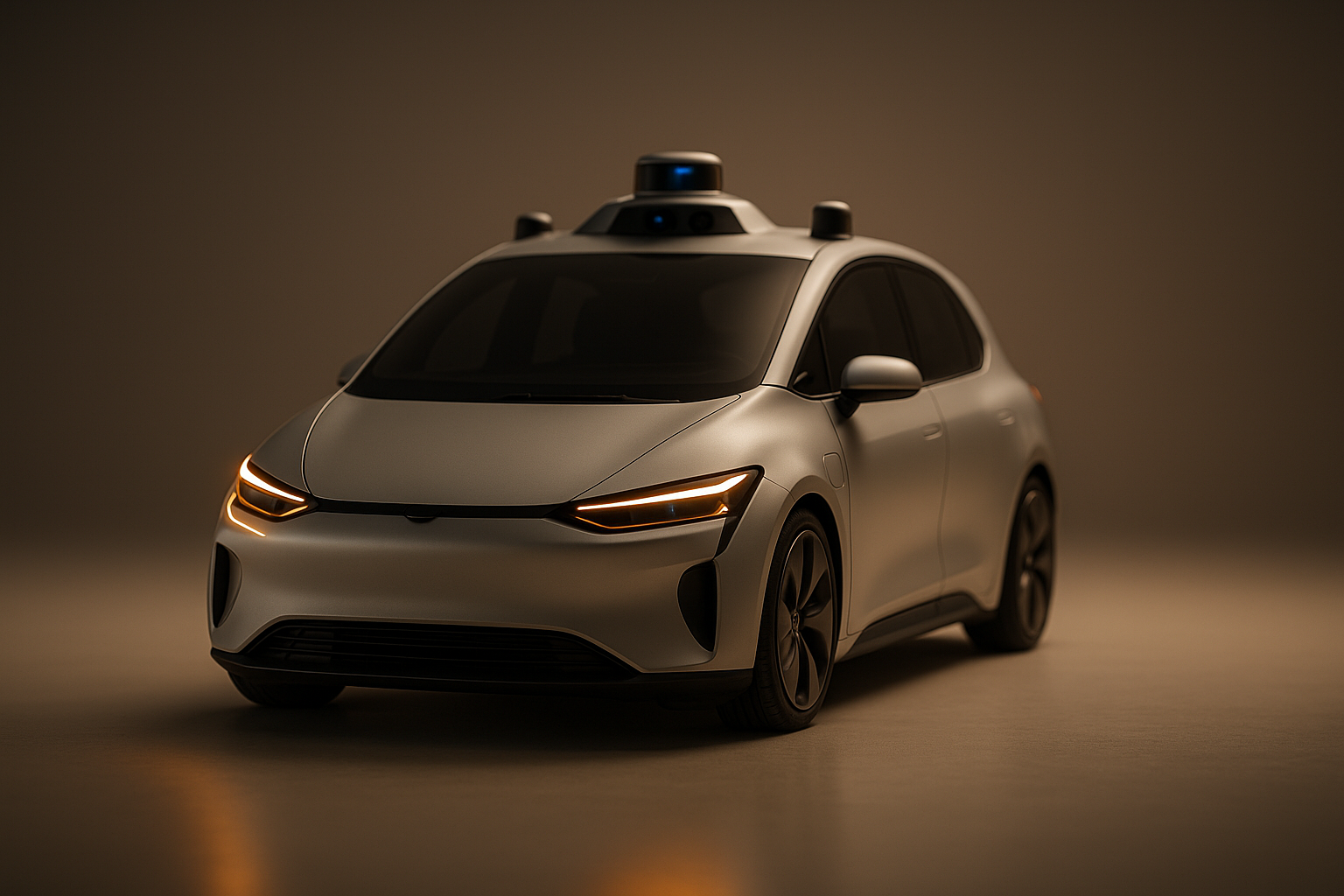
?What will a Tesla Robotaxi likely cost when it arrives at scale, and how should you think about the different price points, fare structures, and economic trade-offs?
Tesla Robotaxi Price Expectations
You probably want a clear picture of what Tesla Robotaxi pricing might look like for purchase, for ride fares, and for fleet economics. This article breaks down the components that determine price expectations, lays out realistic scenarios, and gives you a practical sense of how those prices could impact you as a rider, owner, or investor.
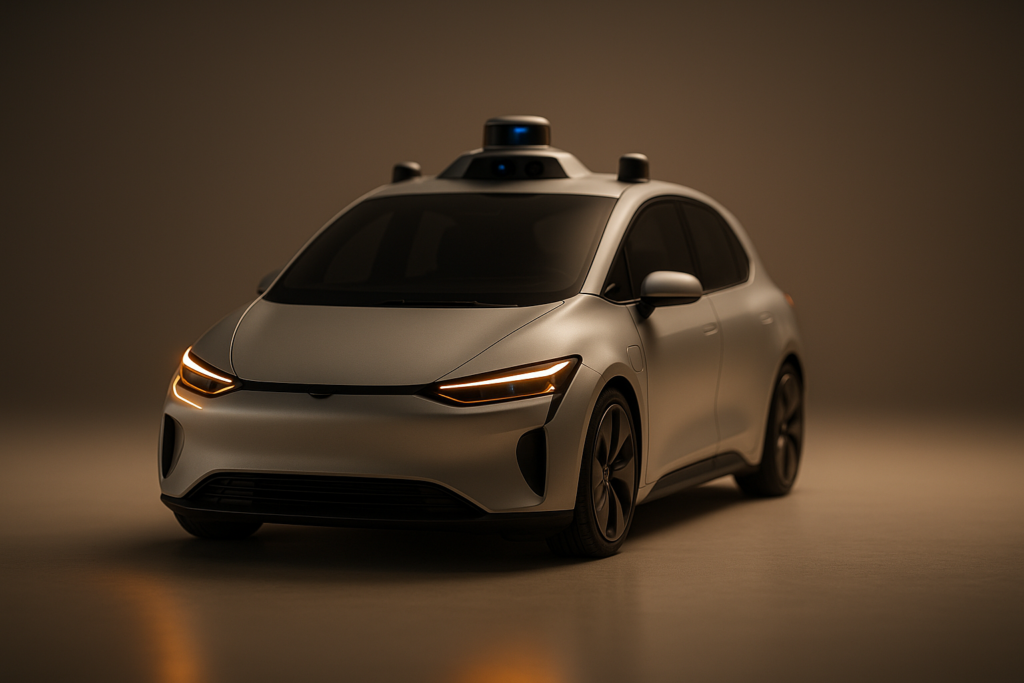
What is a robotaxi?
A robotaxi is an autonomous, driverless vehicle used to provide on-demand passenger transportation without a human behind the wheel. It’s essentially a self-driving taxi that operates similar to ride-hailing but without driver labor costs.
Why pricing matters
Pricing determines how quickly robotaxis displace traditional taxis, ride-hailing services, and private car ownership. You need to understand pricing to evaluate affordability, business viability, and the broader economic implications for cities and consumers.
Tesla’s approach to robotaxi pricing
Tesla aims to leverage vertically integrated manufacturing, software control, and massive data collection to drive down marginal cost per ride. Expect Tesla to consider both one-time purchase prices and dynamic fare models tailored to utilization and geography.
Key cost components that drive price
There are distinct capital and operating cost components that set the baseline price and fare levels for a robotaxi. Understanding these components helps you see where the savings—or the premiums—come from.
- Capital costs (CAPEX): vehicle chassis, battery pack, sensors and compute hardware, manufacturing and assembly overhead.
- Operating costs (OPEX): electricity/energy, maintenance, tires, cleaning, insurance, software updates, fleet management and customer support.
- Indirect costs: regulatory compliance, charging infrastructure investments, depreciation, and financing.
Component cost breakdown
Seeing the breakdown in a simple table helps you compare a hypothetical robotaxi to a conventional EV. These are illustrative estimates based on industry data and trends; specific figures will vary.
| Component | Typical EV (2024) Estimate | Robotaxi Adjustments / Notes |
|---|---|---|
| Battery pack | $8,000–$12,000 | Larger capacity may be used for 24/7 operations; fast charging capability adds cost |
| Powertrain & chassis | $6,000–$10,000 | Similar to EV but may be optimized for durability |
| Sensors & compute | $1,000–$5,000 (Tesla likely lower) | Tesla emphasizes camera/AI approach; compute costs for inference will be notable |
| Interior & durability | $2,000–$6,000 | Fleet-ready interiors built for heavy use can increase cost |
| Manufacturing overhead | $5,000–$10,000 | Economies of scale lower per-unit overhead |
| Software & integration | $2,000–$10,000 (amortized) | Development is high up-front but marginal cost declines |
| Total approximate CAPEX | $24,000–$53,000 | Robotaxi-specific configuration may sit toward higher end initially |
How manufacturing scale affects price
The more Tesla produces robotaxis, the more unit costs decline due to economies of scale and learning curve improvements. This affects both the sticker price for a purchasable robotaxi and the capital investments fleet operators need to make. If Tesla achieves gigafactory-level scale for vehicles and battery cells, price reduction can be dramatic.
Software and AI: large up-front cost, small marginal cost
The autonomous stack is expensive to develop but cheap to replicate once validated. You should expect the first wave of vehicles to carry high software amortization, while later models will reflect far lower per-vehicle software costs. Continuous updates will also improve performance without proportional cost increases.
Hardware choices matter: sensors and compute
Tesla emphasizes a camera-first approach rather than LIDAR, which can reduce hardware costs substantially. If Tesla can avoid expensive sensor suites while maintaining safety, you should see lower CAPEX. However, high-reliability compute hardware and redundancy for safety will still contribute meaningful cost.
Battery pack and energy consumption
Battery cost and efficiency are critical because robotaxis will often run many more miles per day than personal cars. Faster-degrading cycles and fast-charging stress can increase replacement costs. You should account for both energy price per kWh and accelerated battery replacement cycles in any economic model.
Regulatory and insurance factors
You will be affected by insurance and regulatory burdens that vary by jurisdiction, and these can significantly change operating cost. Transitional regulations may impose higher compliance costs initially, while mature frameworks could reduce insurance premiums and clarify liability over time.
Maintenance, downtime, and fleet operations
Robotaxis will need frequent maintenance and cleaning due to high utilization, and downtime reduces revenue. Effective fleet management, predictive maintenance, and high utilization rates are essential to keep costs per mile low. As a rider, that translates into reliability and availability; as an investor, it affects profitability.
Charging and energy infrastructure
The availability and cost of charging infrastructure shape robotaxi economics. Tesla’s Supercharger network or private fleet charging hubs reduce charging logistics friction. You should expect investments in fleet charging to be a material part of early deployments.
Pricing models Tesla might use
Tesla can apply several pricing models simultaneously. Each model affects perceived affordability and revenue differently.
- Direct sale: you buy a robotaxi as a vehicle for private use or as a revenue-generating asset.
- Fleet-as-a-service: Tesla owns vehicles and leases them to operators or runs them directly, taking a share of rides.
- On-demand fares: per-ride pricing similar to ride-hailing but with dynamic pricing based on demand.
- Subscription: flat monthly fee for access to rides or ownership-like experience.
- Revenue-sharing: you buy the vehicle and Tesla takes a management/commission fee on rides.
Purchase price expectations: scenarios
You likely want concrete numbers. Below are three scenarios for a purchasable Tesla Robotaxi price over different maturity stages. These are illustrative and reflect potential reductions from scaling and technology improvements.
| Scenario | Early rollout (Year 1) | Mid adoption (5–7 years) | Mature mass-market (10+ years) |
|---|---|---|---|
| Low-capability model | $40,000–$60,000 | $30,000–$45,000 | $20,000–$30,000 |
| Standard robotaxi model | $60,000–$90,000 | $40,000–$60,000 | $25,000–$40,000 |
| Premium/fully redundant model | $90,000–$150,000 | $70,000–$100,000 | $40,000–$70,000 |
You should interpret these ranges as dependent on regulatory acceptance, liability arrangements, sensor choices, and battery economics. Early vehicles will likely be more expensive due to lower volume and higher validation costs.
Fare pricing: how much you might pay per ride
Robotaxi fares will differ by city, time of day, and utilization. However, the lack of driver labor should materially reduce per-mile fares. Here are rough per-mile estimates comparing current ride-hailing averages to potential robotaxi fares.
| Service type | Current (approx.) | Potential robotaxi fare (initial) | Potential robotaxi fare (mature) |
|---|---|---|---|
| Ride-hailing (pooled) | $0.60–$1.50 per mile | $0.30–$0.80 per mile | $0.10–$0.50 per mile |
| Ride-hailing (solo) | $1.50–$3.50 per mile | $0.80–$2.00 per mile | $0.30–$1.00 per mile |
| Robotaxi subscription (per ride equivalent) | N/A | $0.50–$2.00 per mile | $0.20–$0.80 per mile |
These numbers depend on utilization and local energy/insurance costs. You should expect pooled robotaxi trips to be especially cheap compared to solo rides.
How utilization changes unit economics
Utilization (percent of time the vehicle is earning revenue) is the single most important driver of robotaxi economics. Higher utilization spreads fixed costs over more miles and reduces per-ride costs. If you’re evaluating ownership as an income asset, you must model realistic utilization rather than theoretical maxima.
- Low utilization (~8–10%): expensive per mile, slower payback.
- Medium utilization (~20–35%): plausible for urban fleets, better margins.
- High utilization (~40%+): requires dense demand and efficient routing, drives strong profitability.
Owner economics: buy and let your robotaxi work for you
If Tesla allows owners to add their vehicle to a shared fleet, you could earn revenue that offsets ownership cost. Typical models suggest you might split gross fare revenue with Tesla or a fleet operator. Here’s a simplified example to help you do the math.
Example assumptions:
- Purchase price: $50,000
- Average fare revenue per active hour: $15
- Active hours per day: 10 (utilization ~40%)
- Gross daily revenue: $150
- Operating costs (energy, maintenance, insurance, management): $60/day
- Net daily revenue: $90
- Annual net revenue (365 days): $32,850
At $32,850 net annual income, you would recoup $50,000 purchase in roughly 1.5 years before financing and taxes. This is an optimistic scenario and depends on high utilization and favorable revenue splits. You should consider taxes, downtime, and unexpected costs when calculating real returns.
Fleet operator economics: CAPEX, OPEX, payback
As a fleet operator you focus on cost per mile and lifetime vehicle economics. Here’s a simplified annual economics table for one robotaxi under three utilization scenarios.
| Metric | Low Utilization | Medium Utilization | High Utilization |
|---|---|---|---|
| Annual miles | 15,000 | 60,000 | 100,000 |
| Revenue per mile | $0.80 | $0.60 | $0.50 |
| Annual revenue | $12,000 | $36,000 | $50,000 |
| Operating cost per mile | $0.40 | $0.30 | $0.25 |
| Annual operating cost | $6,000 | $18,000 | $25,000 |
| Net annual operating income | $6,000 | $18,000 | $25,000 |
| Vehicle CAPEX amortized (5 years) | $10,000 | $10,000 | $10,000 |
| Net profit before financing/taxes | -$4,000 | $8,000 | $15,000 |
You can see that high utilization materially changes profitability. You should plan for realistic demand patterns, maintenance schedules, and local fare competition.
Dynamic pricing and surge
Tesla will likely use dynamic pricing algorithms to manage demand and maximize utilization, much like current ride-hailing. This affects you as a rider because fares will vary by time, location, and availability. Expect surge pricing to persist until supply comfortably meets peak demand.
Global differences in pricing
Robotaxi prices will vary by region because of labor cost differentials, regulatory environments, energy prices, and vehicle import/export dynamics. For example, China might see lower fares due to denser urban areas and aggressive local manufacturing, while many European cities could experience higher insurance and regulatory costs.
Competitive landscape and pricing pressure
Other companies (Waymo, Cruise, Baidu, others) will influence price expectations. Competition could push fares down quickly in urban cores, while areas with limited competition might see higher prices. You should monitor regional competitors to understand local price dynamics.
Consumer acceptance and willingness to pay
How much you’re willing to pay will determine adoption speed. Factors like perceived safety, privacy, cleanliness, and convenience shape your willingness to switch from private cars or driver-based ride-hailing. Incentives, trial programs, and early discounts could accelerate consumer trust.
Risks and uncertainties that affect prices
Several uncertainties could change price trajectories dramatically. These include regulatory delays, liability rulings, unexpected safety incidents, hardware failures, battery shortages, and macroeconomic shocks. You should account for these when estimating timelines and price declines.
Potential timeline for price evolution
Here’s a rough timeline of how prices might evolve as adoption moves from pilot to mass market. These are directional estimates based on possible technology and policy progress.
| Stage | Timeframe | Price/availability impact |
|---|---|---|
| Pilot deployments | 2024–2027 | High fares, limited supply, high CAPEX per vehicle |
| Local commercial fleets | 2027–2031 | Prices start to drop, limited geography expansion |
| Regional scale-up | 2030–2035 | Substantial price declines, more fleet ownership models |
| Mass-market maturity | 2035+ | Low per-ride costs, robotaxis integrated with public transit |
You should treat this timeline as flexible; real-world developments will accelerate or delay each stage.
How Tesla’s vertically integrated model could change pricing
Tesla controls hardware, software, manufacturing, and charging infrastructure, which could give it an advantage in reducing per-vehicle and per-ride costs. If Tesla leverages its integrated supply chain and software monetization, you might see faster and deeper price cuts than from companies that need to coordinate multiple vendors.
Environmental and societal price impacts
Lower fares could shift many trips from private cars to shared robotaxis, reducing parking demand and city congestion but potentially increasing vehicle miles traveled. You should consider how cheaper mobility could change your behavior and urban design.
Financing and leasing options for you
Tesla or third-party financiers will likely offer a range of financing and leasing options to spread the up-front CAPEX. You should compare total cost of ownership (TCO) against projected rental income if you plan to use the vehicle as a revenue asset.
Insurance and liability implications for your wallet
Insurance models for driverless vehicles are evolving. You should expect higher premiums initially until insurers gain confidence and regulators clarify liability. Over time, insurance costs could decline if autonomous safety performance proves superior to human drivers.
Practical tips if you plan to ride robotaxis
- Compare pooled vs solo ride pricing to save money. Pooled rides will almost certainly be the cheapest way to travel.
- Use off-peak travel to avoid dynamic surge pricing. Prices will vary by time and location.
- Track pilot programs and city trials to get early access to discounts and promotional pricing.
- Evaluate subscription offerings if you need predictable monthly mobility costs.
Practical tips if you plan to buy or invest
- Model realistic utilization rates, not theoretical maximums, when calculating returns.
- Include buffer for battery replacement, downtime, and regulatory fines in your projections.
- Diversify geographic exposure to hedge against local regulatory delays.
- Watch Tesla’s software monetization strategy; software fees or revenue shares could materially change your net returns.
Frequently asked questions
Q: Will robotaxis be cheaper than ride-hailing?
A: Generally yes, especially for pooled rides, because driver labor is the largest single cost in current ride-hailing. As utilization and scale increase, fares should decline further.
Q: Will you be able to buy a robotaxi and earn money right away?
A: Possibly in some jurisdictions. Early programs will likely have restrictions and revenue-sharing terms. Check local pilot rules and Tesla’s program specifics.
Q: How soon will fares be low enough to significantly change commuting behavior?
A: In dense urban areas, within a decade is plausible if adoption and regulation progress favorably. Widespread impact may take longer in less dense regions.
Q: Are battery costs the biggest price risk?
A: Battery costs are a major factor, but software, insurance, regulatory, and utilization variables can be equally or more important to per-mile economics.
Q: How should you evaluate pilot programs and price promotions?
A: Use them to understand real-world wait times, ride quality, and hidden fees. Promotions are useful for short-term savings but may not reflect eventual sustainable pricing.
Long-term outlook
Over the long term you should expect robotaxis to exert downward pressure on per-ride costs, particularly for pooled services. The combination of scale, software efficiency, and reduced labor costs makes a future with significantly cheaper on-demand mobility likely. However, the exact pace depends on many interlinked factors, including regulation, public acceptance, and competition.
Final thoughts for your planning
Think in scenarios and build models that account for low, medium, and high adoption. If you’re a rider, be ready for cheaper alternatives to owning a car in many urban areas. If you’re a potential owner or investor, focus on utilization, operational efficiency, and the terms of revenue sharing. If you follow these principles, you’ll be better positioned to make decisions as Tesla Robotaxi pricing becomes clearer.