
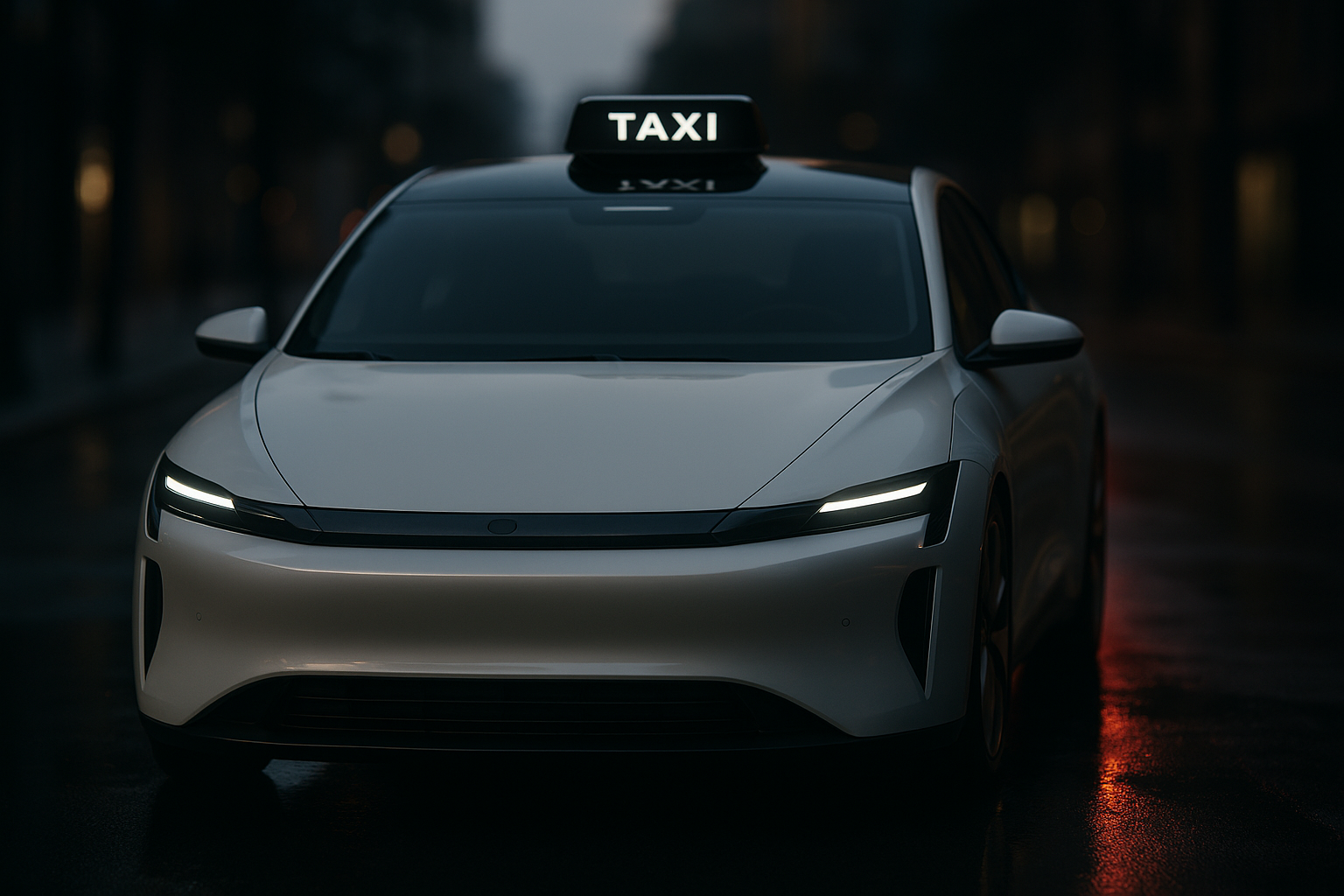
Are you curious about when you might finally be able to hail a Tesla robotaxi?
Tesla Robotaxi Release Date Rumors
Overview: What is a Tesla Robotaxi and why it matters
A Tesla robotaxi is Tesla’s vision of an autonomous, driverless ride-hailing vehicle that can operate without a human in the driver’s seat. If it arrives at scale, it could transform personal transportation, reshape urban mobility, and create a new revenue stream for Tesla and vehicle owners.
You should understand that when people talk about the “robotaxi,” they usually mean fully driverless operation (SAE Level 4 or 5) used commercially for on-demand rides. This differs from current driver-assist features that still require human supervision.
Why release-date rumors are so persistent
Rumors thrive because Tesla’s mission and Elon Musk’s public timeline-oriented comments suggest big, near-term leaps. You get periodic statements, prototype demonstrations, and software updates that fans, investors, and competitors scrutinize.
You should expect a mix of optimistic predictions, company hints, regulatory milestones, and hard technical realities to shape the rumor mill. Those pieces often combine into a shifting schedule rather than a firm date.
Quick primer: Tesla’s autonomy stack
Tesla’s self-driving approach relies mostly on cameras (Tesla Vision), neural networks, onboard compute, and an evolving Full Self-Driving (FSD) software suite. Tesla has historically avoided lidar and prioritized visual perception and fleet learning.
You should remember that software plays a central role: improvements in AI models, labeling, and edge compute optimization matter as much as sensor hardware and regulatory approvals.
Short history of major public milestones
You’ll find several noteworthy announcements that fuel robotaxi speculation: Tesla’s Autonomy Day, numerous Elon Musk tweets about timelines, staged demos, and incremental FSD Beta rollouts. These events create an ongoing narrative about readiness and capability.
You should treat early promises as intentions rather than guarantees. Public-facing demos sometimes show impressive capability in controlled conditions but don’t always reflect the complexity of large-scale deployment.
Hardware: what’s required and where Tesla stands
Tesla has shipped vehicles with different hardware generations (HW2.x, HW3, and rumors of HW4/HW5). Compute power, sensor quality, and redundancy are critical for fully driverless operation.
You should note that many rumors hinge on new hardware releases—if Tesla needs a next-generation chip or additional sensors to meet safety or regulatory expectations, that will affect any release schedule.
Tesla Vision and sensors
Tesla’s camera-first approach emphasizes high-resolution visual data combined with neural networks trained on vast fleet data. Radar was phased out from some models; lidar has been rejected publicly by Tesla.
You should know that vision-only solutions require robust edge-case handling (bad weather, low light, unusual objects). The extent to which Tesla has solved those edge cases is central to robotaxi readiness.
Compute and redundancy
Fully driverless cars generally need redundant compute, braking, steering, and power systems to meet safety standards. Tesla’s in-house Full Self-Driving computer (HW3) raised expectations, but some believe HW4 or additional system-level redundancy will be required.
You should watch for announcements about new vehicle architectures or recall-like retrofits that could indicate Tesla is preparing its fleet for commercial robotaxi operation.
Software: FSD, neural nets, and fleet learning
Tesla’s FSD software progresses via iterative updates, closed beta testing, and fleet data aggregation. The company leverages real-world data from millions of miles to refine its models.
You should appreciate that training, validation, scenario testing, and regression checks take time. Moving from a driver-supervised beta to unrestricted driverless operation requires solving many rare and unusual situations.
Simulation and edge-case coverage
Simulation accelerates testing by exposing models to many edge-case scenarios at scale. Tesla reportedly uses both real-world data and synthetic scenarios to train its networks.
You should keep in mind that simulated safety doesn’t always translate perfectly to the real world, which is why regulators demand robust testing and transparency.
Regulatory landscape and legal hurdles
Regulation is one of the biggest unknowns. You’ll face different rules across U.S. states, countries, and cities. Authorities want evidence that systems are safe and auditable, and they may require specific redundancies or certifications.
You should expect a patchwork rollout: pilot programs in permissive jurisdictions, conditional approvals tied to driverless test permits, and varying definitions of what qualifies as an autonomous taxi service.
Insurance, liability, and public policy
Who is responsible in a crash—owner, fleet operator, or software provider—is a complex legal question. Insurers and legislators are still adapting to autonomous vehicles.
You should pay attention to pilot programs that clarify liability models, because they often shape broader regulatory acceptance.
Testing and deployment scenarios
There are a few plausible deployment paths for a Tesla robotaxi. Each has different timelines and risks.
You should consider these common scenarios when parsing rumors:
- Limited pilot in a single city with geofenced operations (low-speed, mapped urban areas).
- Fleet owner model where owners add cars to a Tesla-operated network.
- Full, nationwide deployment only after broad regulatory clearance (longest pathway).
Geofenced city pilots
Many autonomy projects start in specific cities with favorable regulations and pre-mapped routes. Geofenced pilots reduce complexity and are easier to certify.
You should expect Tesla to prefer testing in cities with supportive local authorities and well-understood road patterns.
Gradual expansion vs. big-bang launch
A gradual expansion lets Tesla iteratively improve software, collect data, and manage regulatory hurdles. A big-bang commercial launch would require final regulatory approval and extraordinary confidence in system reliability.
You should be skeptical of claims that suggest an immediate nationwide rollout; incremental scaling is more realistic.
Competition: who else is building robotaxis?
A number of players are pursuing autonomous ride-hailing: Waymo, Cruise, Mobileye, Baidu, Pony.ai, and others. Each uses slightly different tech stacks and commercialization strategies.
You should watch competitors’ regulatory approvals and city partnerships as indicators of how the market is maturing. Competition can also tighten regulatory expectations.
Table: Comparison of major robotaxi competitors (generalized)
| Company | Approach | Current focus | Notable strengths |
|---|---|---|---|
| Tesla | Camera-first, fleet learning | Fleet data + FSD Beta | Massive vehicle fleet, direct consumer reach |
| Waymo | LiDAR + vision + radar | Geofenced driverless service | Mature driverless stack, robust mapping |
| Cruise | LiDAR/vision/radar | Urban deployments | Backing from GM, city-focused pilots |
| Mobileye | Camera + mapping + ADAS | Tiered partnerships | Strong camera perception tech, scalable OEM integrations |
| Baidu | Sensor fusion + mapping | China-focused robotaxi | Local partnerships, government ties |
You should use this table to get a high-level sense of approaches rather than definitive technical details.
Rumored timelines and what they mean
Rumors about release dates fall into several buckets. Below is a structured look at optimistic, likely, and conservative scenarios based on typical industry patterns and public statements up to mid-2024.
Table: Rumored release-date scenarios
| Scenario | What it assumes | Typical timeline (rumor-based) | Practical realities |
|---|---|---|---|
| Optimistic | Rapid software breakthroughs, regulatory cooperation | Within 6–12 months after announcement | Likely limited to controlled cities; heavy caveats |
| Moderate | Continued beta expansion, HW upgrades, pilot approvals | 12–36 months | Phased rollout to select cities, growing availability |
| Conservative | Significant technical/regulatory hurdles, new hardware requirements | 3–6+ years | Full commercial scale requires long, iterative work |
You should treat these ranges as frameworks to interpret announcements and not definitive schedules.
Why optimistic rumors appear
Elon Musk and other executives sometimes provide ambitious timelines. Those statements can be aimed at motivating teams, setting expectations, or influencing investors.
You should recognize that tech companies historically under- or over-estimate timelines for complex system launches. Historically, AV timelines have often been optimistic.
Why moderate and conservative timelines are plausible
Safety, regulation, edge-case coverage, and public acceptance are non-trivial. Proving safety statistically requires many miles of diverse operation, and regulators may demand more evidence than a company anticipates.
You should plan for longer timelines when you hear high-confidence predictions.
Public perception and safety concerns
You’ll see intense public scrutiny as autonomous systems interact with vulnerable road users. High-profile incidents can slow approvals and change public sentiment.
You should expect Tesla (and others) to emphasize safety milestones and transparent reporting to build trust.
Metrics regulators and the public will watch
Authorities and the public focus on disengagement rates (in supervised trials), incident reports, and how systems handle complex scenarios like construction zones or emergency vehicles.
You should look for standardized metrics and third-party auditing as signs of maturing capability.
Business model: how Tesla might commercially operate robotaxis
Tesla’s hinted several business-model ideas, including owner-contributed fleets where Tesla manages rides and revenue-sharing with owners, or a company-owned fleet.
You should consider implications for vehicle wear, insurance, and residual value if owner cars are used as robotaxis. Owners could gain income, but they also accept additional operating demands.
Pricing and economics
A robotaxi’s competitiveness depends on per-mile operating cost, utilization, and passenger pricing. Lower operating costs per mile could undercut human-driven ride-hailing, but initial capital and regulatory costs will be high.
You should expect early pricing to reflect pilot costs and gradually decrease with scale and efficiency.
Practical issues for vehicle owners and riders
If you plan to participate—either as an owner offering your car or as a rider—there are practical questions: vehicle upkeep, cleaning, user verification, and safety protocols.
You should evaluate terms carefully if Tesla offers to include your vehicle in a robotaxi network. Understand maintenance obligations and insurance coverage.
Accessibility and urban integration
Robotaxis could change last-mile connectivity, but they must be accessible to people with disabilities and integrated into public transit planning.
You should look for commitments to accessibility features and integration with local transport authorities when pilots are announced.
Technical and operational red flags to watch
Certain signals suggest more work remains before a true robotaxi launch. Watch for these red flags:
- Continued need for a human safety operator in tests.
- Frequent regression in real-world trips after updates.
- Lack of full redundancy in critical systems.
- No clear regulatory pathway or pending litigation.
You should be cautious if rumors emphasize “pilot” or “commercial” interchangeably—language matters.
Indicators that a release is genuinely approaching
Conversely, these signs indicate tangible progress:
- Mass retrofit or new vehicles shipped with next-gen autonomous hardware.
- Formal permits for driverless operation in multiple jurisdictions.
- Transparent third-party safety audits and published metrics.
- Live, unsupervised operation covering a range of urban scenarios.
You should pay attention to official filings, regulatory approvals, and independent testing as stronger evidence than marketing or tweets.
Frequently heard rumors and how to interpret them
You’ll encounter typical rumor patterns. Here’s how to interpret common claims:
- “Robotaxi next month”: Usually optimistic, often tied to a software milestone rather than a regulatory launch.
- “Owners will turn on autonomous rides and earn passive income”: Possible model, but details on liability, maintenance, and regional legality will matter.
- “Full autonomy already achieved internally”: Internal testing may show promise, but it doesn’t equate to safe public operation at scale.
- “Hardware retrofit imminent for fleet”: If Tesla announces a hardware program, treat it as meaningful—hardware changes are tangible, but installation logistics can be slow.
You should remain skeptical of firm dates until you see regulatory approvals and broad pilot rollouts.
Interaction with cities and infrastructure
Cities will likely require agreements about curb use, pick-up/drop-off zones, and data sharing. Tesla’s negotiation with local authorities will be a practical bottleneck.
You should expect initial rollouts to include specific pick-up/drop-off zones and constraints to minimize friction with city operations.
Insurance, safety testing, and third-party audits
Independent validation by recognized safety organizations or academic partners could accelerate regulatory trust. Insurance industry pilots will also be telling.
You should look for third-party studies or partnerships as signals that Tesla is addressing external scrutiny rather than relying solely on internal metrics.
Your timeline checklist: what to watch in the next 6–36 months
If you want to follow realistic progress, track these items:
- Announcements of mass hardware updates or retrofits.
- Regulatory permits for driverless operation in any city.
- Public pilot launches with real, unsupervised rides.
- Published safety data and independent audits.
- Expansion of FSD Beta user base and measurable improvements.
- Partnerships with ride-hailing platforms or municipal programs.
You should check these indicators periodically; a cluster of them appearing together suggests movement from rumor to reality.
Potential societal impacts if robotaxis scale
If robotaxis succeed, youll likely see reduced demand for private car ownership in dense urban areas, shifts in public transit ridership, and changes in parking infrastructure.
You should also expect economic and labor impacts for drivers who rely on ride-hailing work—policy responses will follow.
Risks and contingencies you should consider
There are multiple risks: technical failure, adverse public reaction, slow or restrictive regulation, or market competition. Any one could delay or reshape a rollout.
You should have contingency plans if you’re planning financially around robotaxi revenue or purchasing a Tesla primarily to monetize it as a future autonomous asset.
How to interpret Elon Musk’s public timeline statements
Musk’s statements mix ambition, motivational leadership, and product marketing. They can be helpful indicators of company priorities but aren’t guarantees.
You should balance his public optimism with independent metrics—regulatory permits, hardware rollouts, and third-party tests.
What experts often say about AV timelines
Industry experts tend to be cautious: autonomous systems require long-tail safety improvements and massive validation. Estimates vary widely; some believe urban driverless service is achievable in a few years under certain conditions, others expect a decade-plus for large-scale, flexible robotaxi networks.
You should take mid-range timelines seriously: not as immediate but not impossibly distant either.
Bottom line: how to think about Tesla robotaxi release-date rumors
Rumors are a mix of technical progress, corporate ambition, and regulatory negotiation. Optimistic timelines often compress or fail to account for certification and edge-case safety testing. Conservative timelines emphasize the complexity and public-safety responsibility entailed by driverless operation.
You should remain informed by watching for hardware rollouts, regulatory permits, independent safety data, and live pilot expansions. Those elements, appearing together, are the most reliable signs that a robotaxi release is moving from rumor to reality.
Final recommendations for staying updated
If you want meaningful updates, track the following regularly:
- Official Tesla safety reports and shareholder communications.
- Regulatory filings in U.S. states and international pilot announcements.
- News of hardware rollouts or recall-style retrofit programs.
- Independent audits or academic evaluations of FSD performance.
- Local city council or transportation authority approvals for trials.
You should treat social-media claims or single tweets as signals to verify, not as confirmation.
Conclusion
You’re likely to see continued buzz and rumors about a Tesla robotaxi release date for months or years to come. While Tesla has unique strengths—large fleet, data scale, and a strong software culture—full commercial robotaxi deployment involves hardware readiness, robust software that handles rare edge cases, regulatory acceptance, and public trust.
You should expect a phased, region-by-region approach rather than a single global launch. Use the indicators in this article to separate hype from evidence, and prepare for both fast-moving pilots and longer timelines for widespread deployment.