
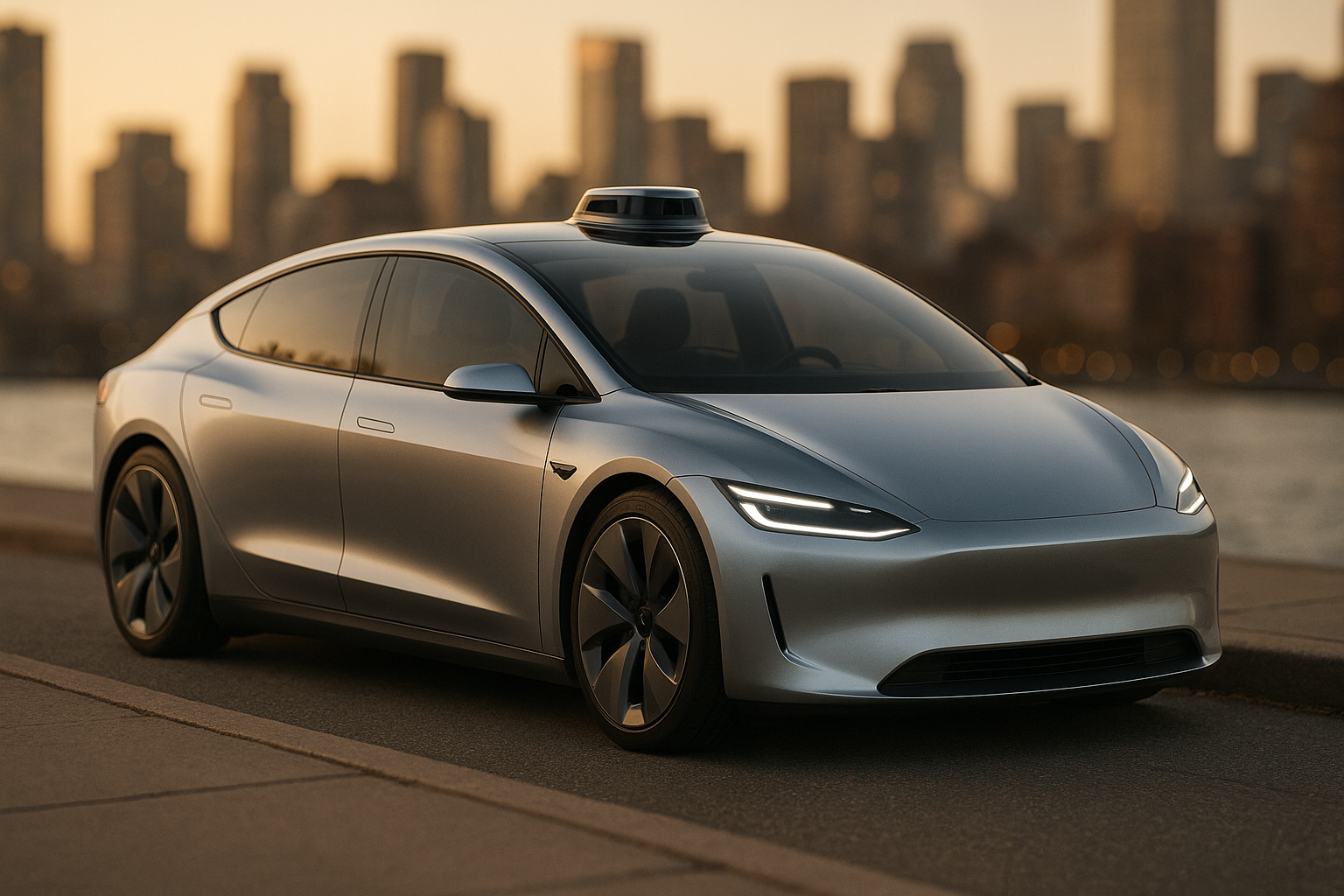
Have you thought about how a fleet of Tesla Robotaxis could change the way you get around your city and what it would cost you?
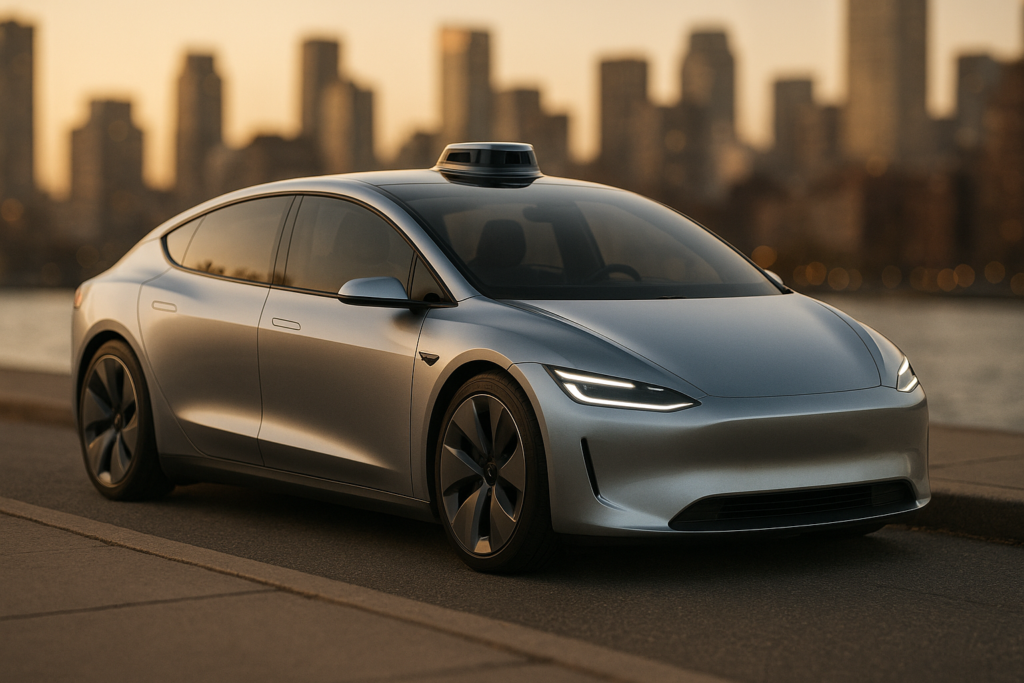
Tesla Robotaxi Cost and Urban Mobility
This article breaks down how Tesla Robotaxis could affect urban transportation, personal expenses, city planning, and environmental outcomes. You’ll get clear cost estimates, scenario analyses, and guidance for policymakers, businesses, and riders.
What is a Tesla Robotaxi?
A Tesla Robotaxi is intended to be a fully autonomous, ride-hailing vehicle that operates without a human driver, allowing owners to add their cars to a Tesla-run ride-hailing fleet or for fleets of purpose-built robotaxis to serve the public. You should think of it as a mix between a self-driving taxi, an autonomous shuttle, and a software-driven platform that monetizes mobility as a service.
How Tesla defines Robotaxi and its core features
Tesla’s vision emphasizes a wave of vehicles that can operate at autonomy levels that remove the need for a human behind the wheel for most driving tasks. You should expect hardware and software optimized for continuous operation, remote monitoring, over-the-air updates, and integration with a Tesla-native ride marketplace.
Autonomy level and hardware
Tesla aims for SAE Level 4–5 behavior in constrained urban and suburban environments, meaning the vehicle could operate without human intervention under specified conditions. The hardware includes cameras, neural nets, backup systems, redundant power and control circuits, and compute platforms that enable real-time perception, planning, and control.
Cost Components of a Tesla Robotaxi
Understanding cost means categorizing one-time capital expenses (CapEx), ongoing operating expenses (OpEx), and variable costs tied to usage. You’ll want a clear view of what drives the price per mile and how scaling a fleet changes economics.
Purchase and manufacturing cost (CapEx)
Vehicle cost includes chassis, battery pack, compute hardware, sensors, and manufacturing overhead. You’ll see different numbers depending on whether the Robotaxi is a retrofit of a consumer Tesla or a purpose-built, high-utilization vehicle designed for fleet operation.
Software and AI development costs
Software development and continuous training of neural networks are significant up-front and ongoing investments. You’ll also pay for mapping, localization, fleet-wide feature updates, and the human-in-the-loop labeling, redundancy validation, and simulation work required to keep vehicles safe and legal.
Battery, maintenance, and repair costs
Batteries are a major portion of Electric Vehicle (EV) cost and their life is closely correlated with utility cycles—more rides mean more charging cycles. You’ll want to account for regular maintenance (brakes, suspension), tire replacement due to high-mileage wear, and repair from accidents or vandalism.
Insurance, liability, and regulatory compliance
Insuring a robotaxi and meeting regulatory requirements can be expensive during early deployment phases and may remain a sizeable line item until liability frameworks and safety records mature. You’ll likely see higher premiums initially, decreasing as regulators approve autonomous operations and safety data accumulates.
Charging and energy costs
Energy cost depends on local electricity prices, charging infrastructure (fast charging vs depot charging), vehicle efficiency in kWh/mi, and the timing of charges (peak vs off-peak). You’ll need to optimize charging schedules, consider vehicle-to-grid or smart-charging strategies, and factor in charging station depreciation and maintenance.
Fleet management and operations (OpEx)
Operations include driver-less vehicle repositioning, remote monitoring personnel, customer support, customer acquisition costs, software operations, cleaning, and facility costs. You’ll also need to account for idle time, deadheading (empty repositioning), and utilization optimization systems.
Estimated cost breakdown per Robotaxi (example)
This sample table shows a hypothetical cost composition for a single robotaxi in its first year of operation. The values are illustrative and will vary by market, scale, and vehicle design.
| Cost Category | % of First-Year Cost | Example $ (per vehicle, year 1) |
|---|---|---|
| Vehicle manufacturing / CapEx | 35% | $35,000 |
| Battery & charging infrastructure | 15% | $15,000 |
| Software development & updates | 10% | $10,000 |
| Maintenance & repairs | 10% | $10,000 |
| Insurance & liability | 8% | $8,000 |
| Fleet operations & staffing | 12% | $12,000 |
| Energy (electricity) | 5% | $5,000 |
| Total | 100% | $95,000 |
Cost per Mile and Pricing Models
You want to know how much each ride costs and how Tesla (or a fleet operator) would price services to be competitive with private car ownership, taxis, and ride-hailing apps.
Cost per mile estimates (assumptions)
Cost per mile is the sum of per-mile depreciation, battery wear, energy, maintenance, insurance, and operational overhead divided by annual miles. High utilization drives down cost per mile; low utilization makes it more expensive. Below is a simplified scenario table with typical utilization tiers.
| Utilization Scenario | Annual Miles per Vehicle | Annual Cost (example) | Cost per Mile |
|---|---|---|---|
| Low utilization | 30,000 mi | $95,000 | $3.17 |
| Medium utilization | 60,000 mi | $110,000 | $1.83 |
| High utilization | 120,000 mi | $130,000 | $1.08 |
These numbers show how utilization and fleet scale materially change per-mile economics; your local market will influence actual figures.
Pricing models for riders (per-mile, subscription, dynamic)
You’ll see several ways Tesla or operators could charge: simple per-mile plus per-minute rates, subscriptions for frequent users, or dynamic pricing based on demand and region. Subscription models can simplify budgeting for regular commuters, while dynamic fares help balance demand and supply during peaks.
Surge pricing, subscriptions, and shared rides
Dynamic pricing can maximize fleet efficiency during peak hours, but it affects public perception and affordability. Shared-ride options reduce cost per passenger and boost utilization, so you’ll likely see pooled Robotaxi services offering steep discounts for riders willing to share.
Cost comparisons: Robotaxi vs ownership vs ride-hailing
To determine value, you’ll compare per-mile and total annual costs across options. The tables below summarize typical costs and what you might pay under different assumptions.
| Mode of Travel | Example Annual Cost (approx) | Notes |
|---|---|---|
| Private car ownership | $8,000–$12,000 | Includes loan, insurance, maintenance, parking |
| Ride-hailing (mixed) | $2,000–$8,000 | Highly variable by usage, surge pricing |
| Tesla Robotaxi (solo) | $1,000–$3,000 | If priced competitively at ~$1–$2 per ride-mile |
| Public transit | $400–$1,000 | Dependent on region and frequency |
You should evaluate your personal travel patterns to understand which option yields the best value for you.
Urban Mobility Impacts
Robotaxis could change travel behavior, road use, land use, and the environmental footprint of cities in ways that benefit or challenge you and your neighbors.
Effects on congestion and traffic
If robotaxis replace private car trips and parking-hunting trips, congestion may decrease, freeing up road capacity. However, if empty repositioning and lower perceived cost lead to more total trips, congestion could increase—your local policy plays a big role.
Induced demand and travel behavior
When travel becomes cheaper and more convenient, people may take more trips or longer trips, causing induced demand. You’ll want policies that manage this risk (e.g., congestion pricing) so you’re not trading one benefit for another problem.
Parking and land use changes
As robotaxis reduce the need for private vehicle ownership and long-term parking, cities can repurpose parking lots and garages for housing, parks, or commercial uses. You could see more walkable neighborhoods and reclaimed urban space.
Impact on first/last mile and transit ridership
Robotaxis can complement public transit by solving first/last-mile gaps, increasing transit ridership if integrated properly. You should look for systems that coordinate timetables and pricing to avoid competition that cannibalizes transit.
Equity and accessibility
Robotaxis can improve mobility for people who are transit poor, elderly, or disabled, if vehicles are designed for accessibility and pricing is equitable. You’ll want to see policy and pricing mechanisms that prevent service deserts and ensure fair access.
Environmental impacts and emissions
Widespread electrified Robotaxis can lower per-passenger emissions compared to gasoline cars, provided electricity is clean and fleet utilization is high. You’ll need to be attentive to lifecycle impacts—manufacturing, battery production, and recycling matter.
| Mode | Tailpipe Emissions (g CO2e/passenger-mile) | Notes |
|---|---|---|
| Gasoline private car | 300–400 | Depends on occupancy and vehicle efficiency |
| EV privately owned | 50–150 | Depends on electricity grid carbon intensity |
| Robotaxi (EV, high occupancy) | 20–80 | High utilization and clean grid reduce footprint |
| Transit (bus, full) | 10–60 | Varies by fuel and passenger load |
Your city’s electricity mix and vehicle utilization will drive environmental results.
Economic and Social Considerations
Robotaxi deployment will reshape local economies in ways you’ll experience as a commuter, worker, or business owner.
Job displacement and creation
You’ll likely see job shifts rather than simple job losses: driving jobs may decline, while roles in fleet maintenance, vehicle supervision, remote operations, software, and infrastructure could grow. Transition programs and retraining will be critical for workers.
Urban economics and property values
Areas with superior mobility might see rising property values, while areas that lose parking may see new development opportunities. You should consider how zoning, tax policy, and inclusive planning can distribute benefits more equitably.
Regulatory and legal frameworks
Your city and state must define liability rules, safety standards, data privacy, and traffic integration. Clear, predictable regulation helps operators and protects users, but it requires balancing innovation and public safety.
Deployment Challenges and Timelines
You’ll want to understand when robotaxis might appear in your city and what obstacles remain.
Technical hurdles and safety validation
Achieving reliable perception in all weather and complex urban scenes is hard. You’ll want rigorous testing, edge-case handling, redundant systems, and transparent safety validation before accepting widespread deployment.
Regulatory approval and liability frameworks
You should expect varied timelines by jurisdiction—some areas may allow pilot fleets faster, others will require years to change laws. Insurance models and liability attribution (manufacturer vs operator vs user) must be ironed out.
Public acceptance and behavior change
You will need to gain trust in autonomous systems. Experience, transparent safety data, and incremental introduction (geofenced zones, shared shuttles) can accelerate acceptance.
Scenarios and Forecasts
You might find it helpful to think in scenarios so you can plan for different futures.
Best-case, moderate, and slow adoption scenarios
Best-case assumes rapid safety validation, infrastructure investment, regulatory support, and lower hardware costs leading to broad adoption. Moderate assumes gradual scaling with mixed usage and regional rollouts. Slow adoption reflects technical, regulatory, or social resistance.
| Scenario | Fleet scale by 2035 in Major Cities | Cost per Ride-Mile (est) | Car Ownership Impact |
|---|---|---|---|
| Best-case | 50–80% of taxis/autonomous fleets | $0.50–$1.25 | Significant reduction (20–40%) |
| Moderate | 20–40% | $1.25–$2.50 | Moderate reductions (10–20%) |
| Slow | <20%< />d> | $2.50+ | Minimal reductions |
You should weigh these scenarios in planning investments or personal mobility choices.
Sensitivity analysis: key variables affecting cost
Key variables that change the economics include vehicle utilization, energy price, battery longevity, insurance rates, regulatory obligations, and vehicle lifetime mileage. Small changes in utilization often have large impacts on per-mile cost.
Policy Recommendations for Cities and Planners
If you’re involved in city planning or policy, these recommendations will help you guide Robotaxi integration to benefit residents and businesses.
Short-term actions (0–5 years)
Start pilots in controlled zones, invest in curb management and charging infrastructure, and create data-sharing agreements for safety and planning. You should also update local ordinances and experiment with dynamic curb pricing to manage demand.
Medium-term actions (5–15 years)
Adopt integrated fare systems, redesign parking zones for mixed uses, and implement congestion pricing where appropriate. You’ll want to invest in workforce retraining programs and formalize liability and safety regulations.
Long-term planning (>15 years)
Rezone parking-dense corridors to add housing and green space, optimize city layouts for reduced vehicle ownership, and modernize public transit to take advantage of Robotaxis for last-mile services. You should plan for resilient electrical grids and circular battery economies.
Practical Advice for Riders and Businesses
Whether you plan to use Robotaxis or operate a fleet, these practical tips will help you make better decisions.
For individual riders considering Robotaxi
Evaluate total monthly transportation costs and convenience compared to ownership and public transit. You should check pricing options, pooled-ride availability, and vehicle accessibility features before committing.
For businesses and fleet operators
Focus on utilization optimization, maintenance turnaround times, and energy cost management to reduce per-mile costs. You should also build redundancy and safety protocols, and engage proactively with local regulators and communities.
Safety, Data, and Privacy
You’ll care about safety performance and how your data is used; both need transparent standards.
Safety standards and independent validation
Independent safety verification, public disclosure of incident rates, and required redundancy increase trust in systems. You’ll benefit from regulators demanding consistent, auditable safety metrics.
Data collection and user privacy
Robotaxis gather large amounts of sensor, location, and behavioral data—cities and operators must promulgate clear rules about retention, anonymization, and permissible uses. You should look for services that let you control your privacy settings and disclose data practices.
Financial Models for Investors and Operators
If you’re investing or running an operation, the economics matter: capital intensity, payback period, and utilization are key.
Unit economics and break-even analysis
You’ll break even when the present value of operating margin per vehicle covers acquisition and infrastructure costs. You should model scenarios with different utilization rates and energy prices to estimate payback periods.
Financing and leasing structures
Leasing batteries, third-party charging contracts, or software-as-a-service models spread upfront costs and can accelerate fleet expansion. You’ll want to choose models tailored to your risk tolerance and expected market growth.
International and Local Market Differences
You’ll notice major variations by region due to regulatory environments, labor costs, electricity prices, and urban form.
Differences in regulation and urban form
Dense, transit-rich cities might get most benefit from integrated Robotaxi services that target first/last mile. Suburban or low-density areas may struggle with economics unless shared rides are forced or heavily subsidized.
Electricity mix and environmental outcomes
Your local grid determines the emissions benefits of electrified Robotaxis—clean grids produce bigger environmental wins. You should pressure utilities and policymakers to decarbonize electricity to maximize benefits.
Long-term Vision: The City of the Future
Imagine what your city could look like with well-managed Robotaxi fleets: fewer parked cars occupying prime land, better first/last mile options, and more public space for people rather than vehicles. You’ll enjoy quicker access to services and possibly lower transportation costs if policies support equitable deployment.
Potential negatives and mitigation strategies
You should be aware that unregulated adoption could increase empty miles, worsen congestion, and lead to uneven service distribution. Policies like congestion pricing, minimum occupancy requirements, and requirements for service in underserved areas can mitigate these risks.
Conclusion
Tesla Robotaxis have the potential to change urban mobility, lower per-mile costs, reduce emissions, and free up valuable urban land, but the net benefits depend heavily on utilization, regulation, and integration with public transit. You’ll want to follow local pilots, advocate for equitable regulations, and assess personal cost-benefit scenarios before switching modes.
If you’d like, I can run a localized cost-per-mile calculation for your city using specific input values (electricity price, average trip length, annual miles) or build a simple spreadsheet model you can tweak for different scenarios. Which would you prefer?